CNC Machining Guides
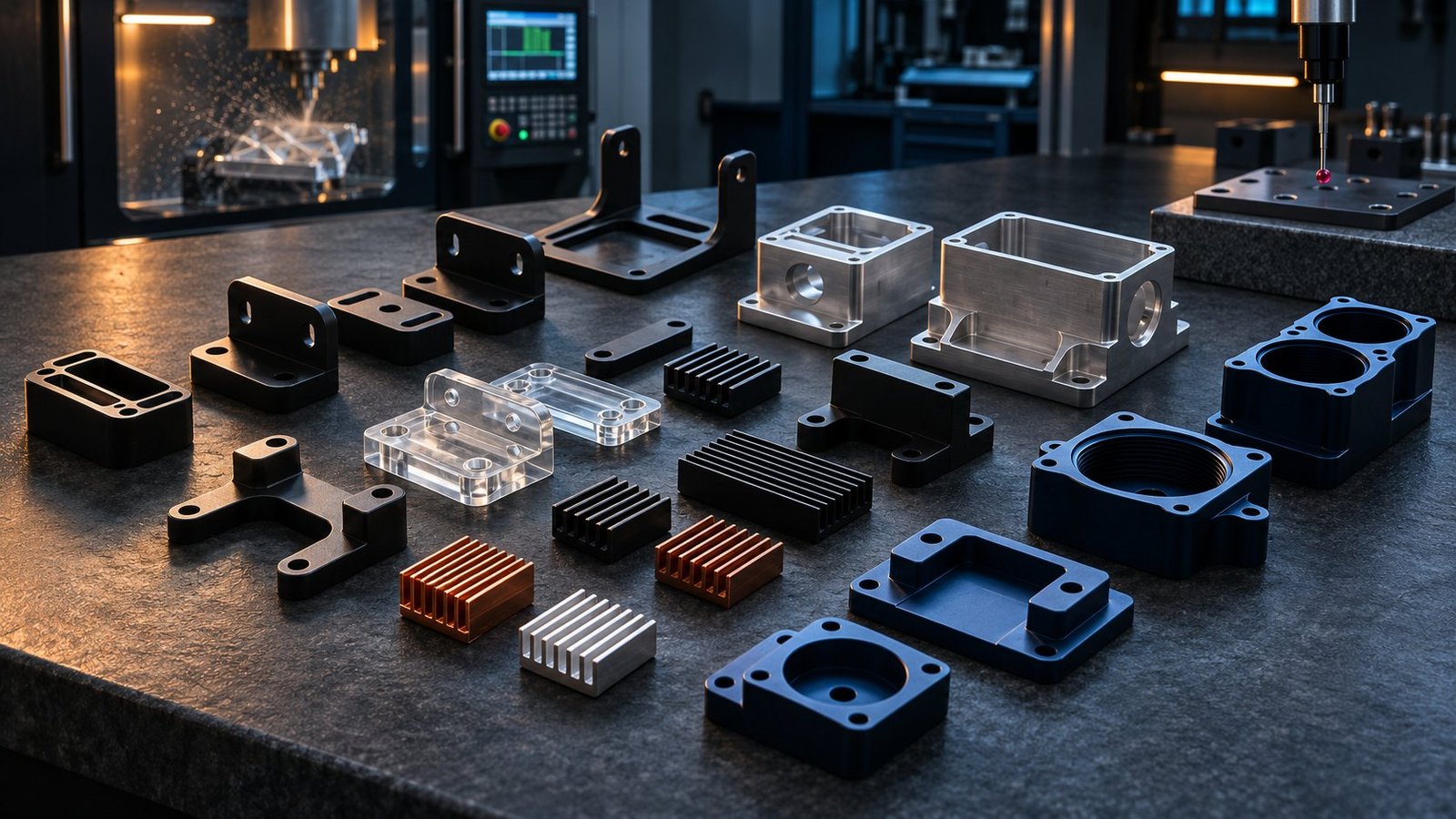
Machined Parts Cosmetic Standard: Quote It Clearly
Define a machined parts cosmetic standard before quoting: visible faces, finish limits, rack marks, inspection, packaging, and price effects.
Read the guide →

Anodizing Dimensional Change: Quote-Stage Fit Guide
Plan anodizing dimensional change before machining. Size bores, shafts, threads, masking, and inspection for a reliable post-anodize fit.
Read the guide →
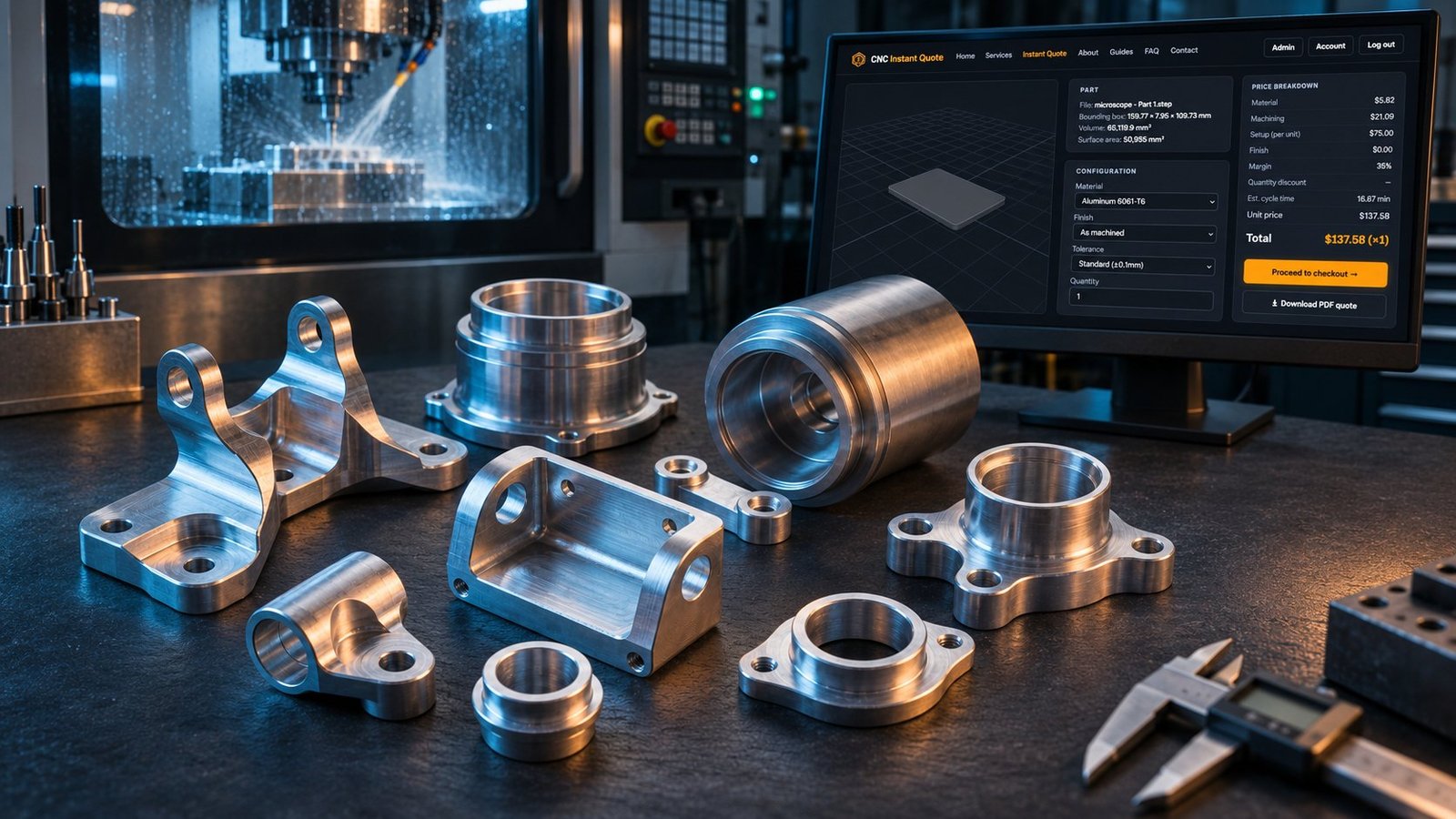
Brass vs Aluminum Machining: Choose Before You Quote
Compare brass vs aluminum machining using stock form, current material movement, cycle time, and real quote deltas before uploading your CAD part.
Read the guide →

3 Axis vs 5 Axis Quote: Choose by Setup Count
Compare a 3 axis vs 5 axis quote by setups, tool access, tolerance risk, and quantity, with real aluminum pricing examples.
Read the guide →
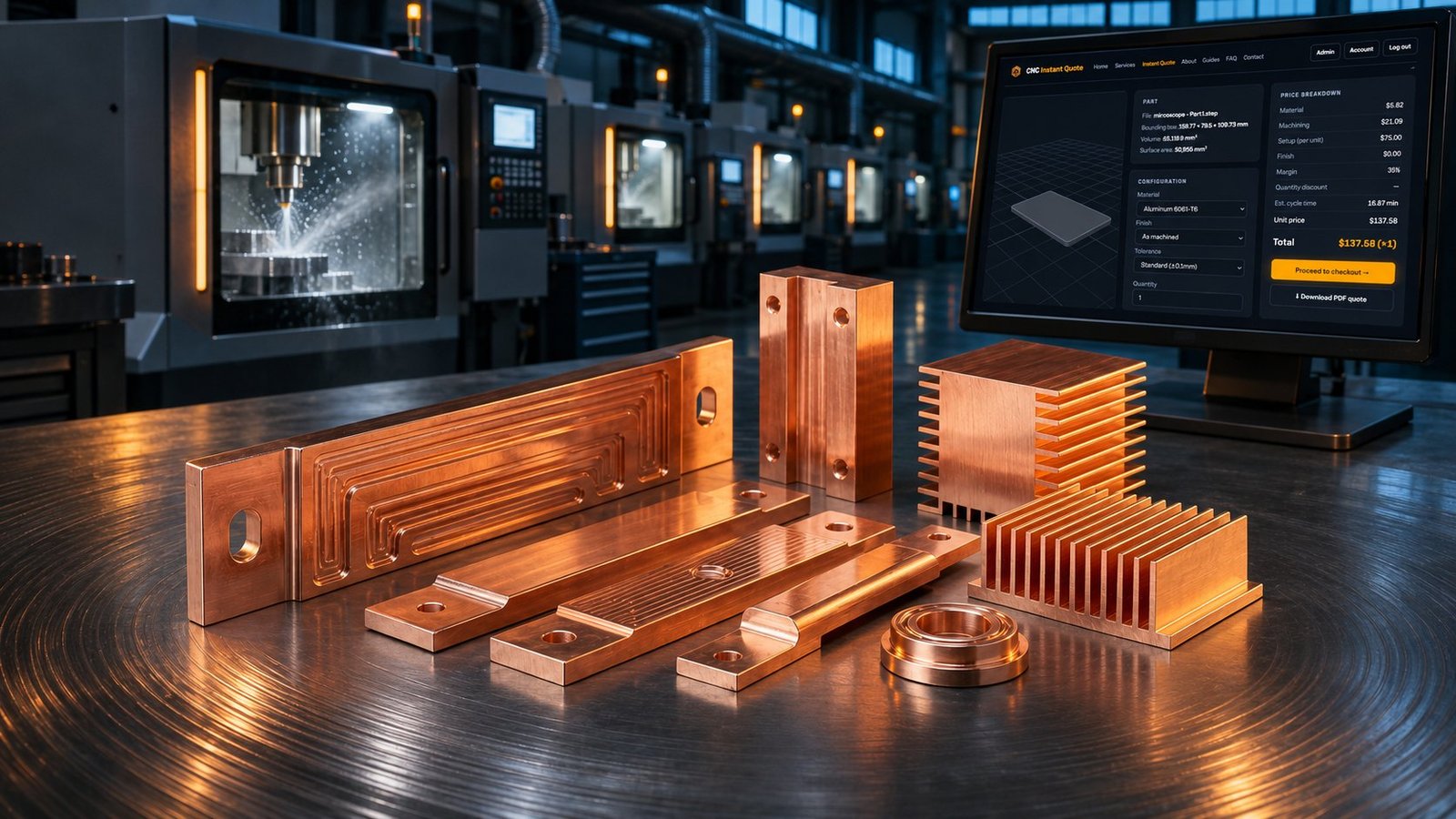
C101 Copper Heat Sink Machining: Quote-Ready Design
Prepare a C101 heat sink CAD upload with fin geometry, flatness, grade, and quantity fields that expose machining cost before release.
Read the guide →
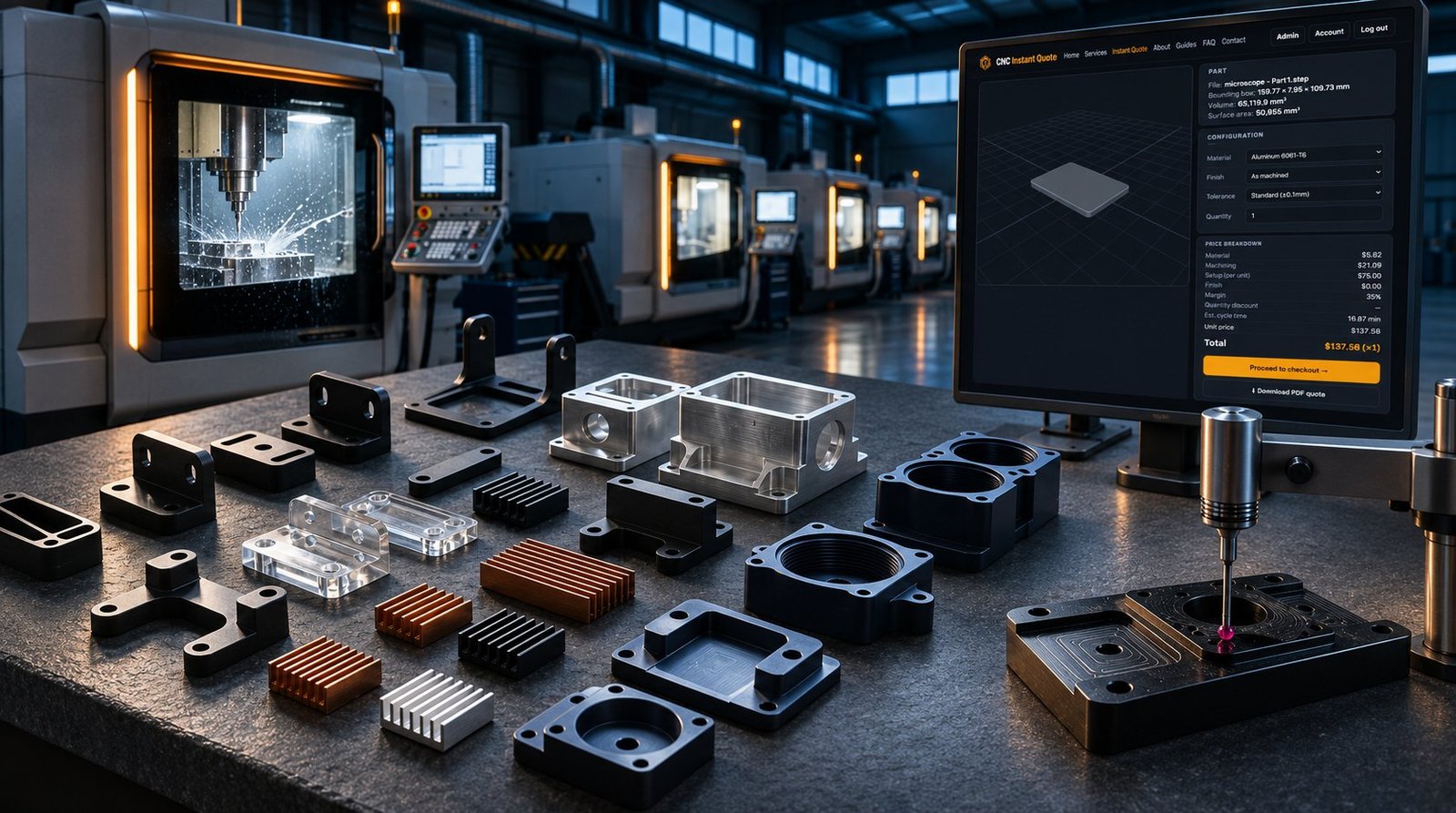
CNC Workholding Quote: Vise, Jaws, or Fixture?
See how CAD features change a CNC workholding quote—vise, soft jaws, or fixture—with tolerance risk, deflection, and quote deltas.
Read the guide →
CNC Price Guide Surface Finish: Quote by Face
Use face-level Ra callouts to price CNC surface finish work. See 6061-T6 quote deltas, ASME B46.1 measurement rules, and anodizing risks.
Read the guide →
CNC Drawing Revision Control at Quote Release
CNC drawing revision control keeps STEP, PDF, and quote data aligned. Use this release checklist to prevent scrap, rework, and pricing delays.
Read the guide →

CNC Turning Tolerance: Quote by Feature
Set CNC turning tolerance by feature: use ±0.05 mm for general diameters, reserve ±0.01 mm and tighter limits for fits, bores, and shafts.
Read the guide →
Thread Milling vs Tapping: Quote the Right Risk
Choose thread milling vs tapping using hardness, hole depth, quantity, and scrap risk. Compare accepted-part cost for M5 and M6 internal threads.
Read the guide →

Machining Quote Validity: What Holds and What Changes
Learn what machining quote validity locks, what expires, and how CNC Instant Quote rechecks 6061-T6 stock before honoring an old price.
Read the guide →

CNC Milling Machine Quote by Part Geometry
Get a cnc milling machine quote that shows axis choice, setup count, tool reach, tolerance risk, and pricing at 1 and 10 parts.
Read the guide →

Deep Pocket Machining: Screen the Risk Before You Quote
Screen pocket depth, reach, corner radius, finish, and tolerance before uploading CAD. See how geometry changes affect your CNC quote.
Read the guide →
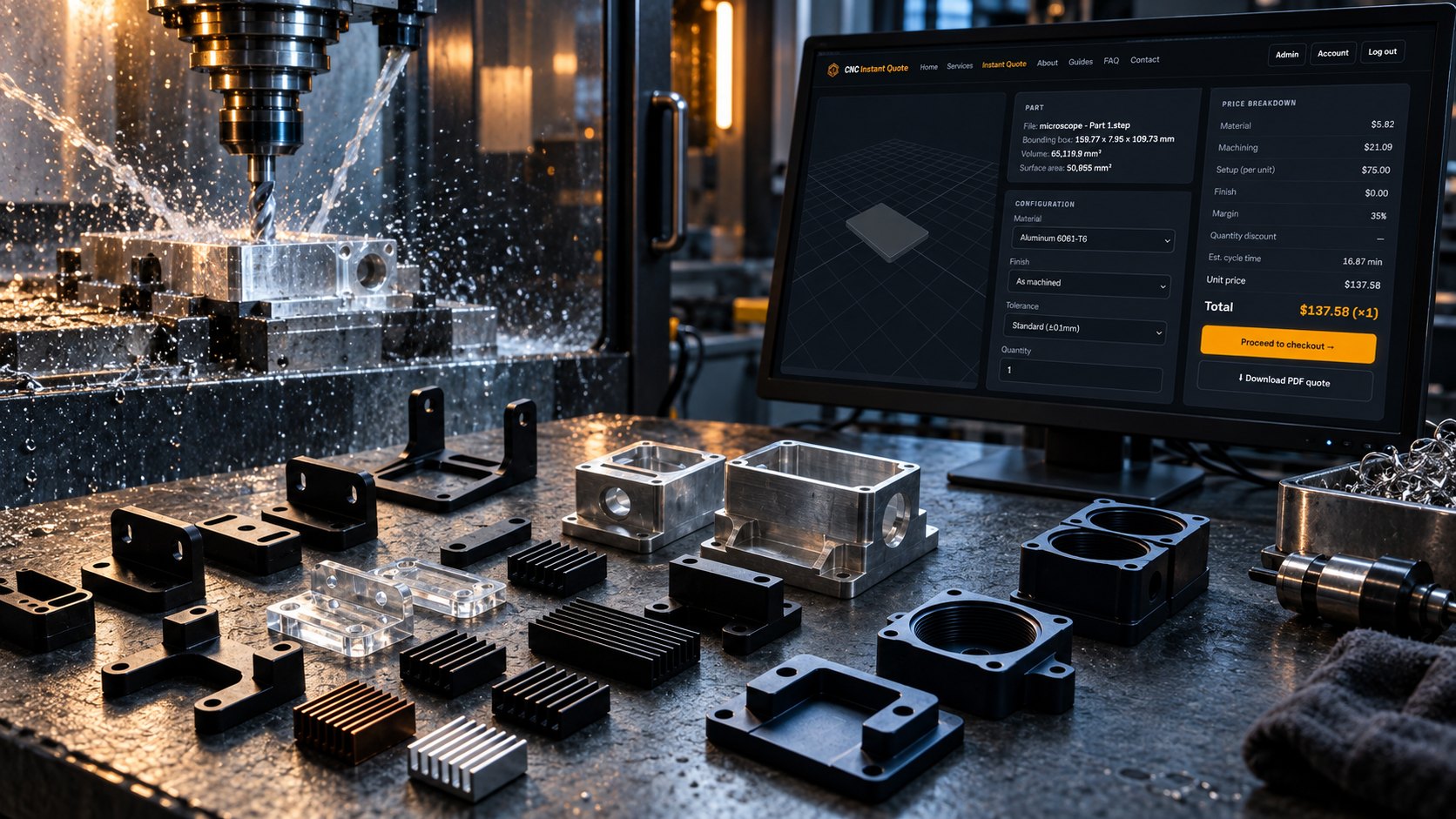
Deburring Drawing Note: Quote Edges That Matter
Turn a vague deburr note into measurable edge limits, functional exceptions, and a quote-ready rule that matches your STEP model.
Read the guide →

CNC Hole Position Tolerance for Quote-Ready Parts
Learn how CNC hole position tolerance, datums, MMC, and hole function change your quote, inspection plan, and assembly risk.
Read the guide →

Partial FAI AS9102C: Quote-Stage Guide
Learn when partial FAI AS9102C applies, what changes belong in Forms 1–3, and how revision scope affects CNC inspection cost and lead time.
Read the guide →

ISO 9001:2026 Supplier Questions for Machined Parts
Use ISO 9001:2026 supplier questions to verify CAD revisions, DFM assumptions, inspection documents, certificate scope, and quote traceability.
Read the guide →
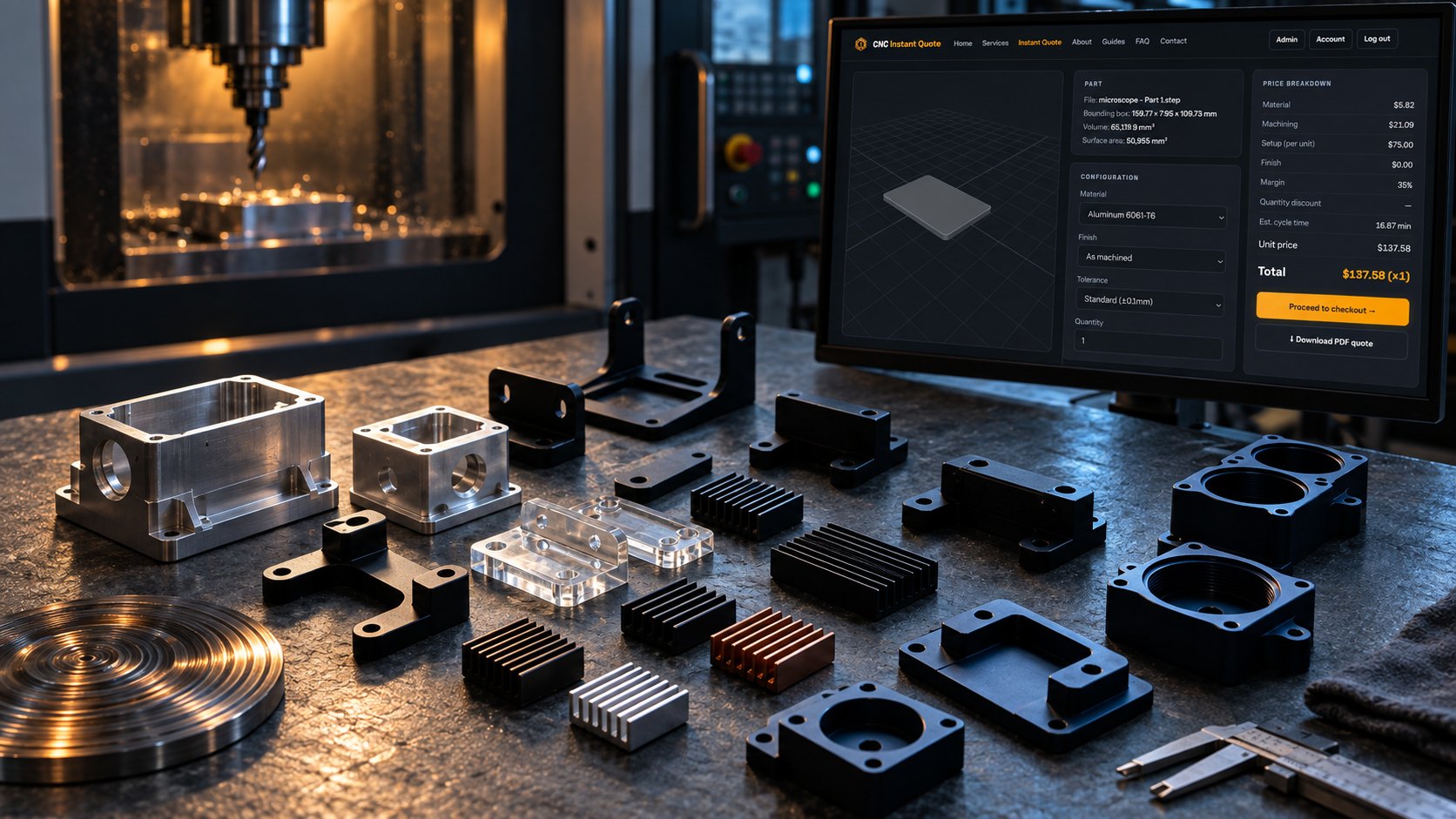
ISO 21920-2 Revision: What to Specify Now
ISO 21920-2 revision status explained for CNC buyers: what ISO 21920-1:2021 requires, what to put on drawings, and how ambiguity changes quotes.
Read the guide →
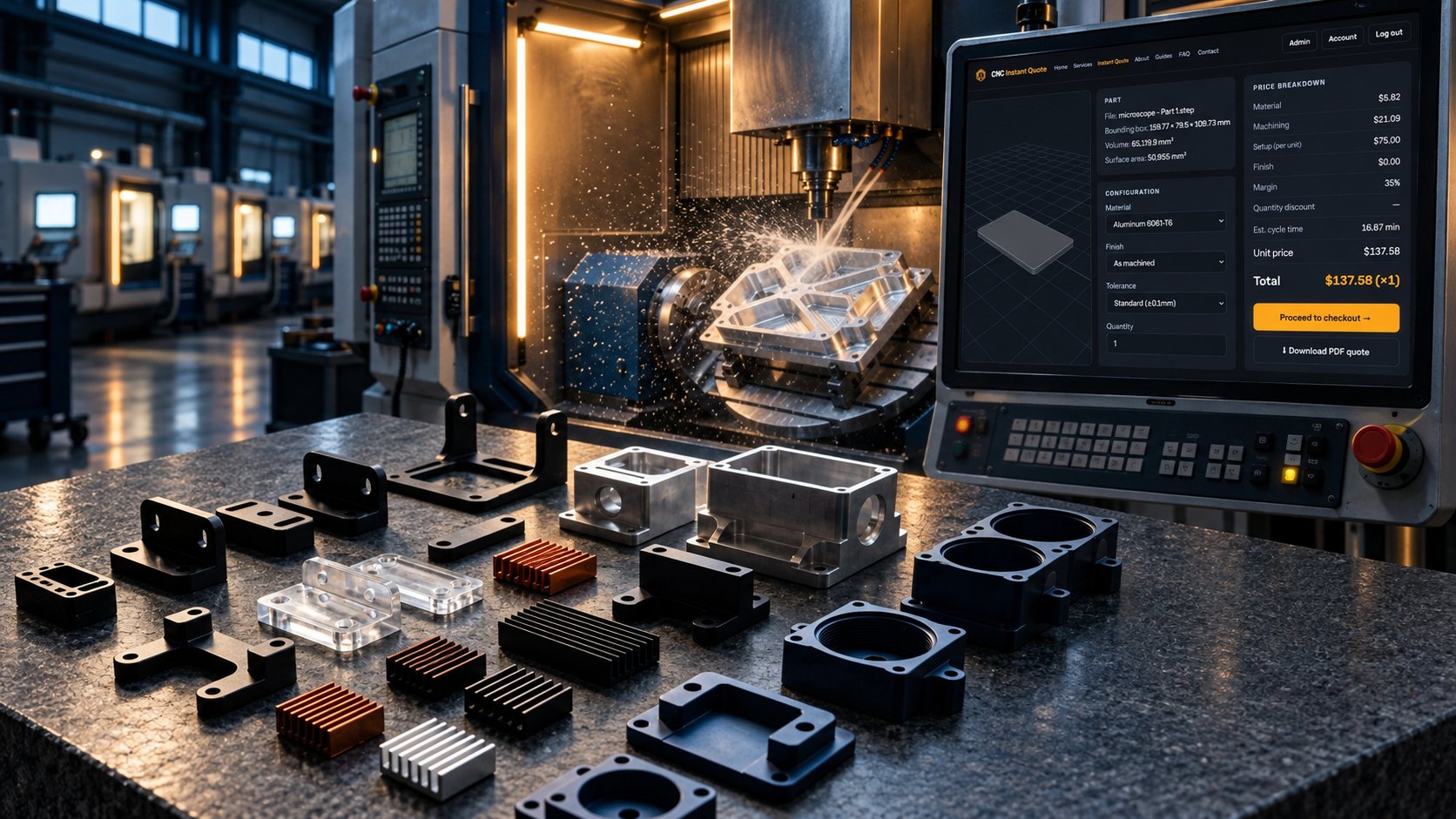
CNC Hole Tolerance H7: Quote the Right Fit
Choose CNC hole tolerance H7 only where the fit needs it. Compare drilling, reaming, position control, measured results, and quote cost.
Read the guide →
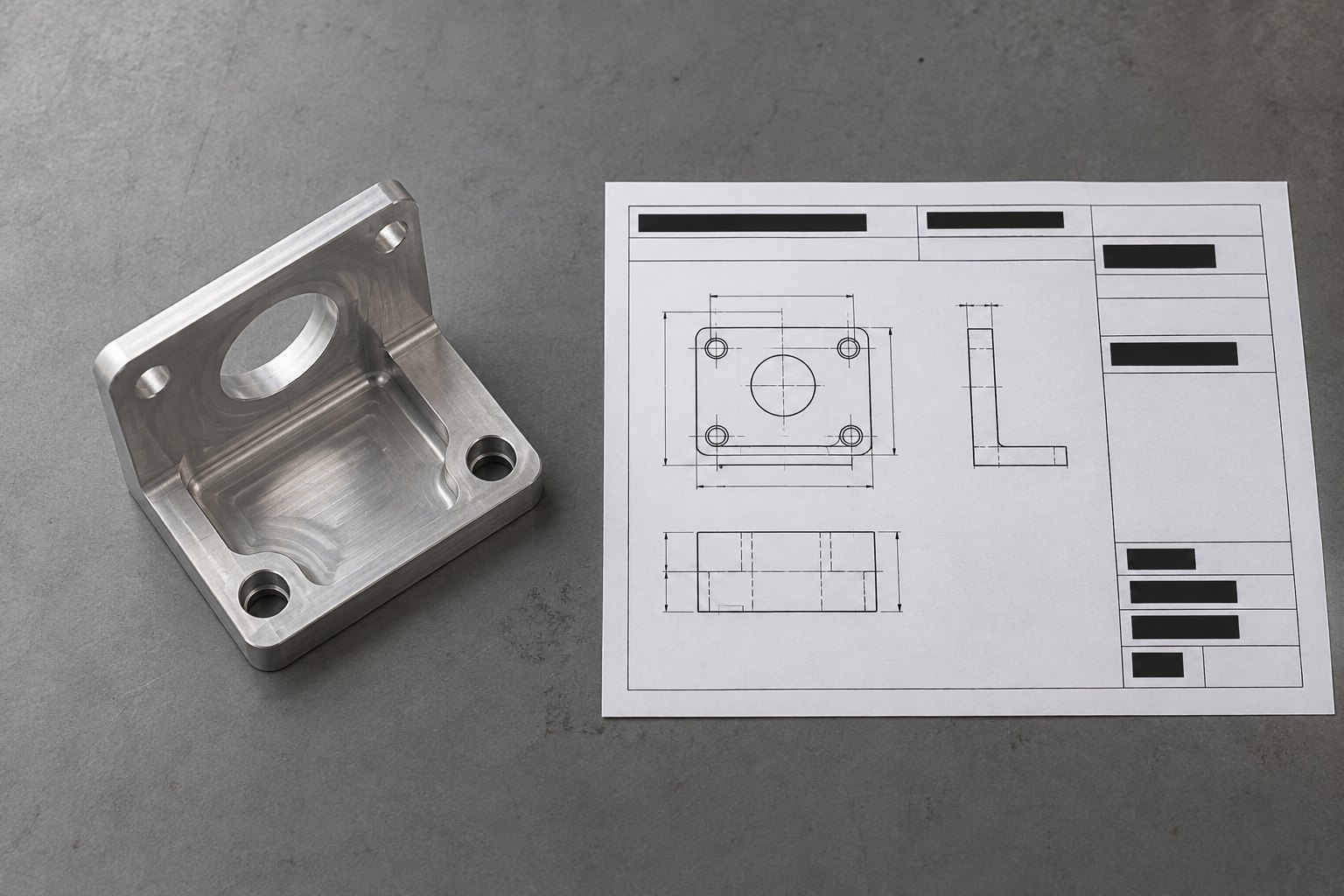
CNC Service Support After CAD Upload
Turn a CAD upload into a clear CNC service support handoff with owners, assumptions, failure triggers, response metrics, and a next action.
Read the guide →
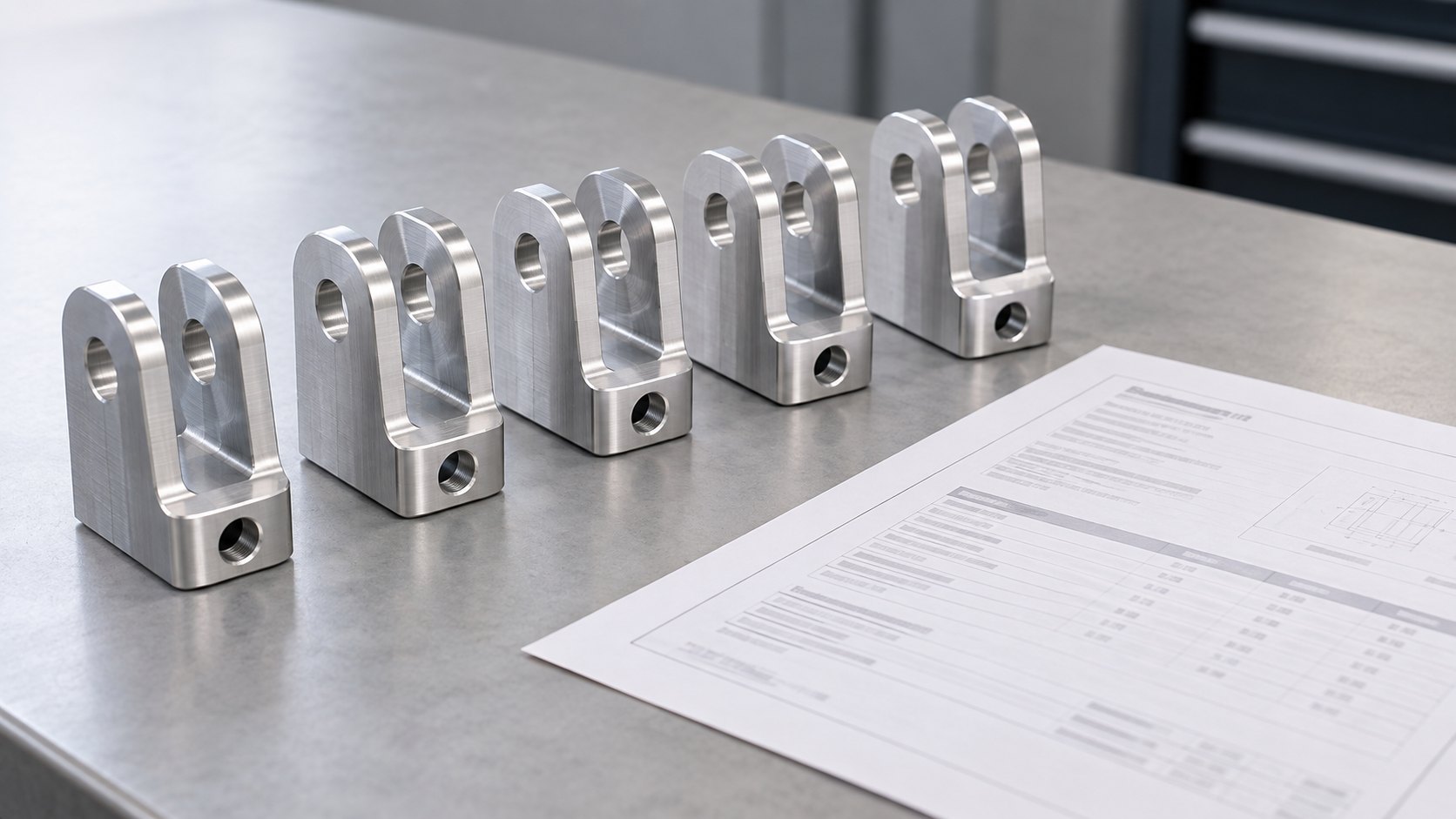
CNC Quote Quantity Breaks, Shown Line by Line
See how setup, inspection, and programming change a CNC quote from 1 to 100 parts, with real STEP-file quantity breaks and lot costs.
Read the guide →
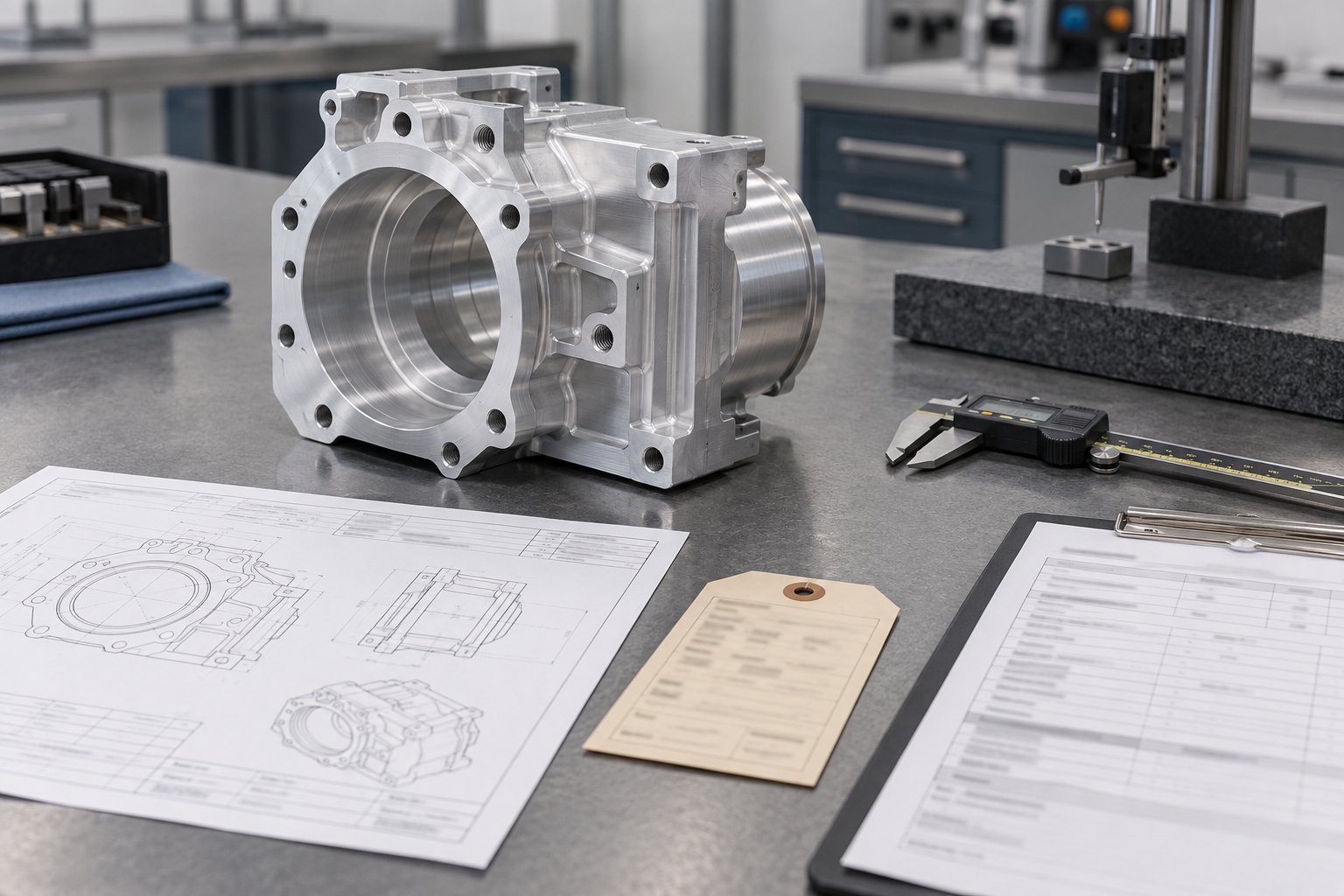
CNC Services Audit: Follow the Order Trail
Use a CNC services audit to trace CAD, material, machining, inspection, changes, and release evidence against ISO 9001:2026 and ISO 19011:2026.
Read the guide →

Why a Quote Change After CAD Review Happens
See why a quote change after CAD review happens: missing specs, DFM risk flags, and what CNC Instant Quote checks before final pricing.
Read the guide →

Shop Rate 6061-T6 Aerospace: What Sets the Price
Shop rate for 6061-T6 aerospace CNC work runs $40-250/hr in 2026. What moves it: 3- vs 5-axis, material certs, CMM inspection and quality-system overhead.
Read the guide →
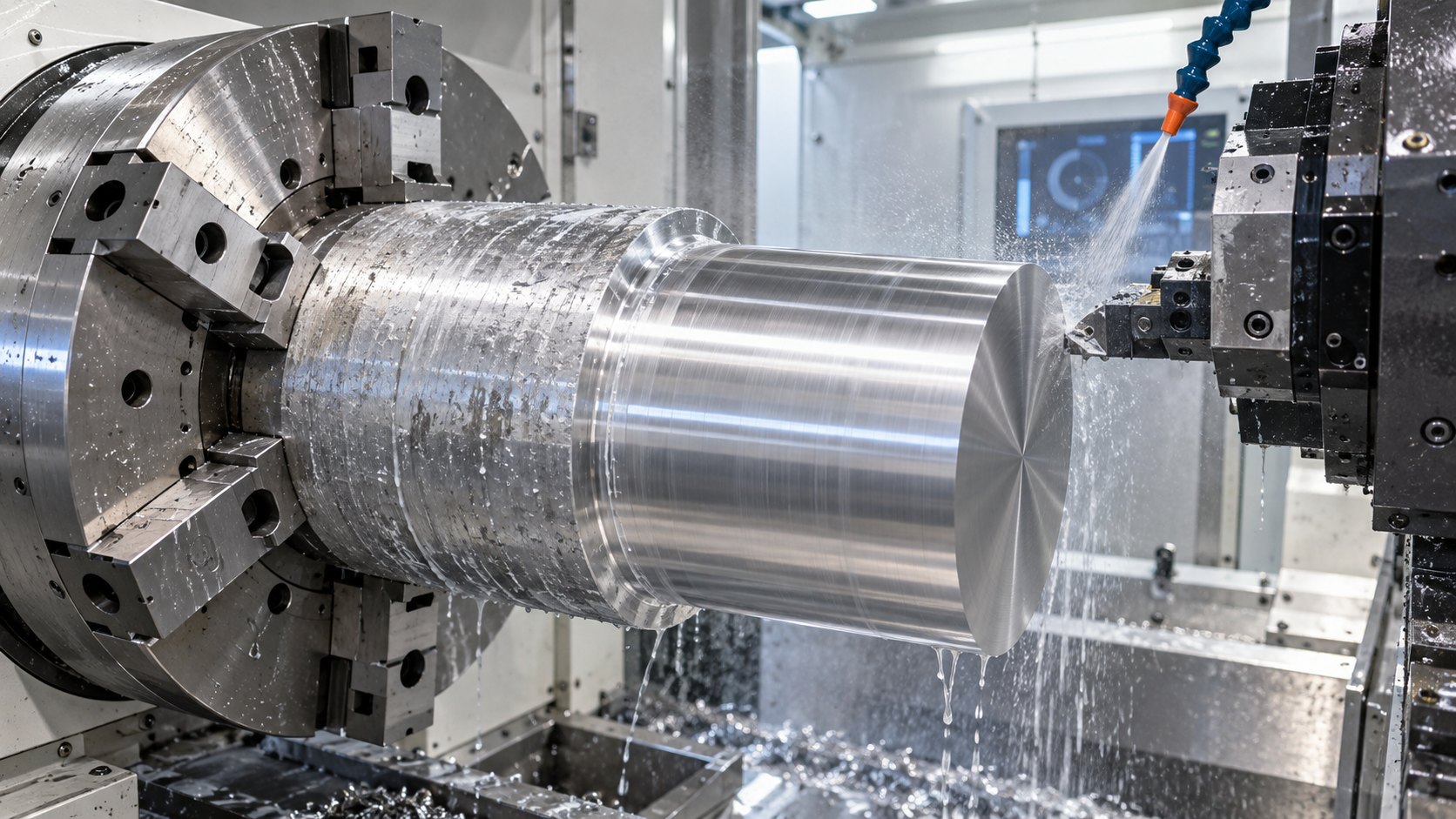
CNC Machining Large Aluminum Cylinder Cost
Why a large aluminum cylinder costs 1.5-2x more per pound to CNC machine than a small bracket: round-stock waste, roughing time and pricing an 8 in part.
Read the guide →
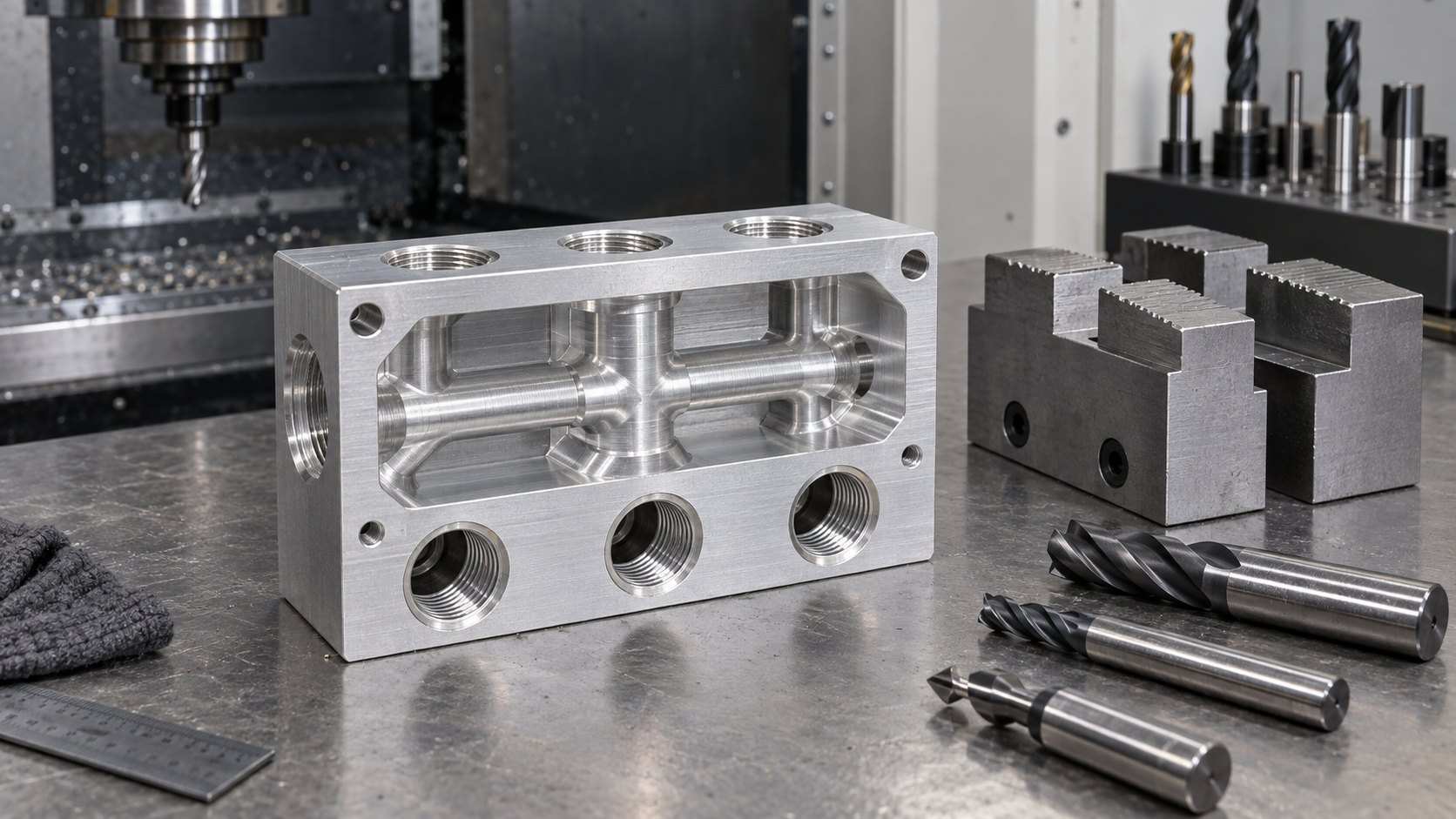
CNC Quote Lead Time for Aluminum Manifolds
CNC quote lead time depends on geometry, material, finishing, quantity, and inspection. Learn how to read a realistic machining window.
Read the guide →
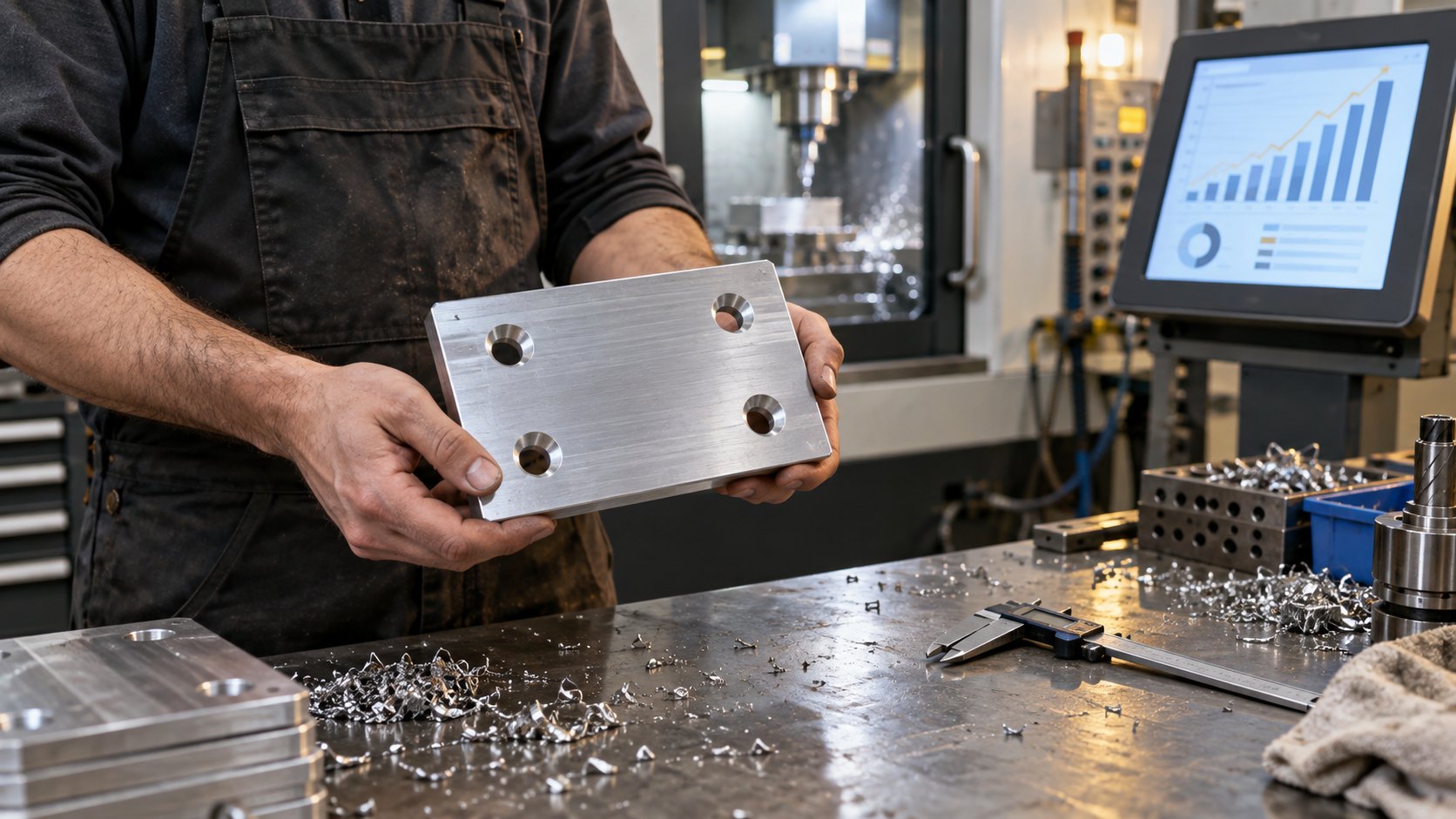
Instant CNC Quote Accuracy: What It Reads
Instant cnc quote accuracy explained: which signals our engine reads from your STEP file, the four gaps that need a human, and how to quote clean.
Read the guide →
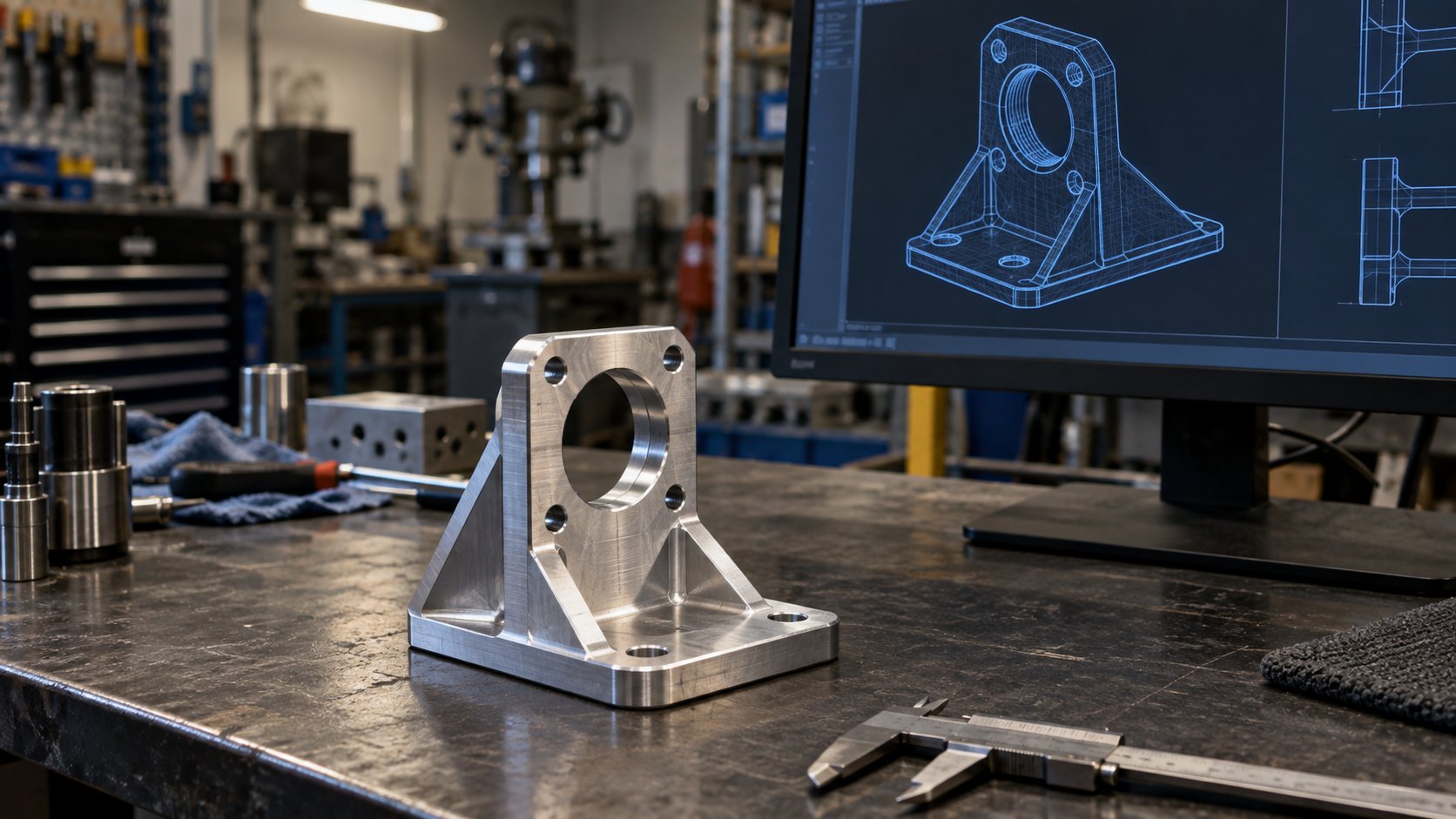
CNC Machining Design Mistakes Cost You More Than You Think
These CNC machining design mistakes cost you the most on every quote — see how one geometry fix can cut your price in seconds.
Read the guide →
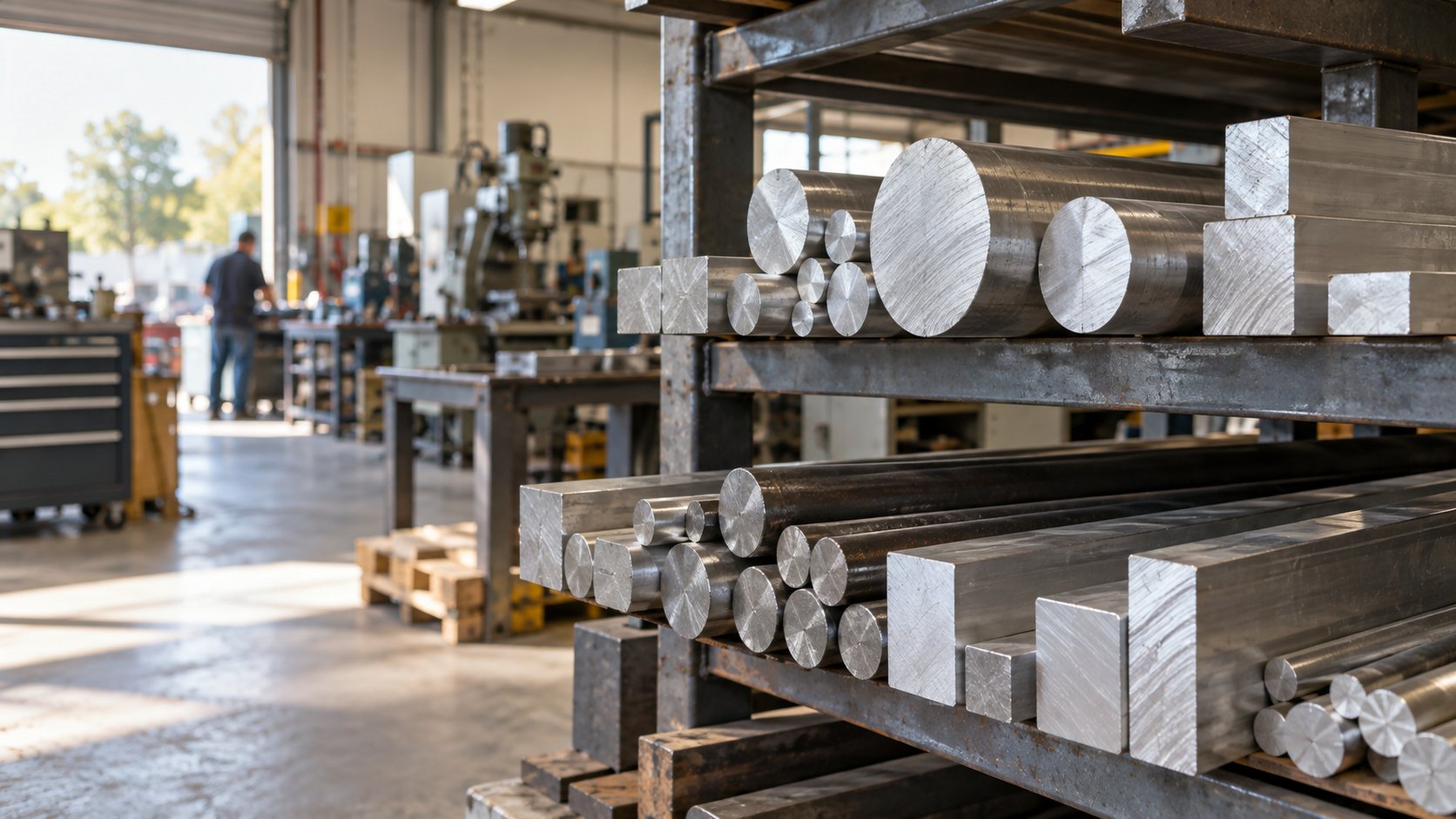
CNC Machining Tariffs 2026: Why Your Quote Costs More
CNC machining tariffs 2026 explained: Section 232 now taxes full part value, aluminum tops $3,100/tonne, and quotes shift fast.
Read the guide →

Aluminum 6061 vs 7075 for CNC Machining: How to Choose
A practical comparison of 6061-T6 and 7075-T6 for CNC machined parts — strength, cost, machinability, anodizing, and when each alloy wins.
Read the guide →
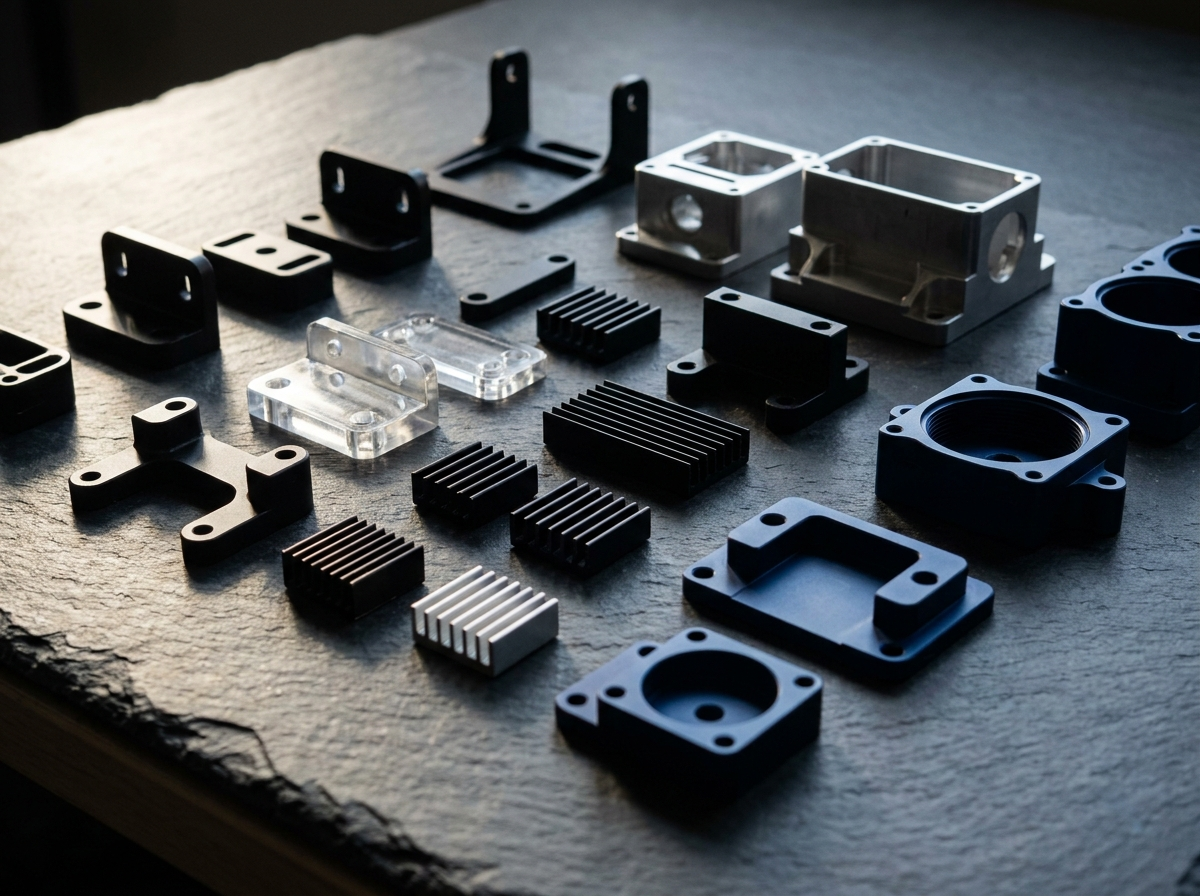
Anodizing, Bead Blasting, or As-Machined? Choosing a CNC Finish
A buyer's guide to CNC surface finishes — Type II anodizing, bead blasting, polishing and passivation: cost, looks, corrosion, and when to use each.
Read the guide →
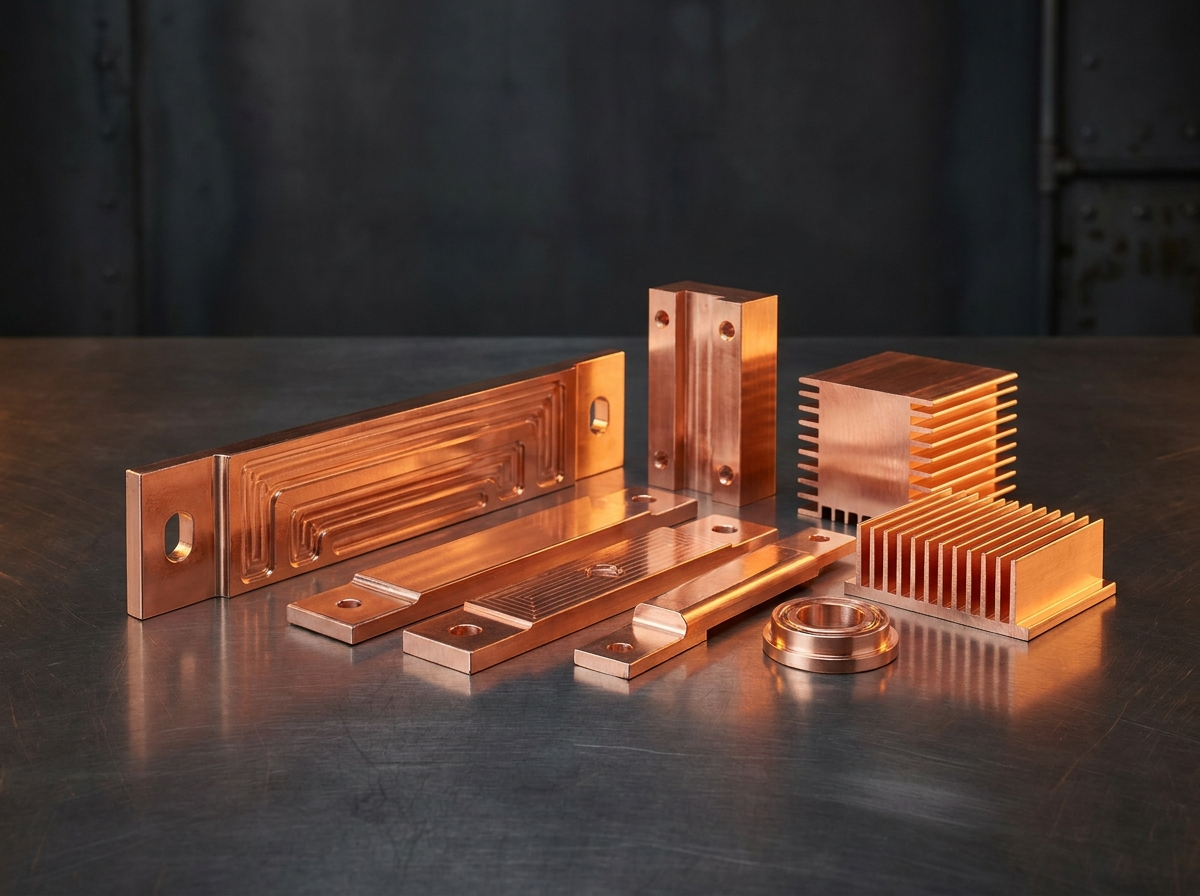
Copper CNC Machining: C101 vs C110 and Design Tips
How to design and buy CNC machined copper parts — C101 vs C110 conductivity, machinability, tolerances, and cost drivers explained.
Read the guide →
Have a part ready?
Upload your STEP file and get an engineering-driven price in seconds.