Anodizing, Bead Blasting, or As-Machined? Choosing a CNC Finish
Published 2026-07-07 · updated 2026-09-22 · Machining Guides

The finish you pick changes the look, corrosion resistance, and price of your CNC parts. Here is a quick, honest guide to the finishes we offer and when each one earns its cost.
As-machined
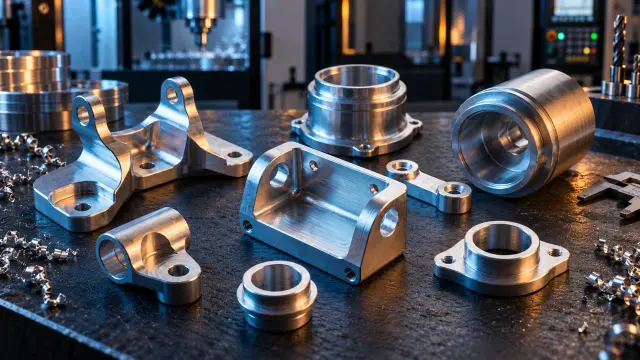
Straight off the mill with visible tool marks (typically Ra 1.6–3.2 µm). Free, dimensionally the most accurate, and completely fine for internal brackets, fixtures, and prototypes. Aluminum will slowly form a dull oxide layer; copper will tarnish.
See also: cnc service support
Bead blasting
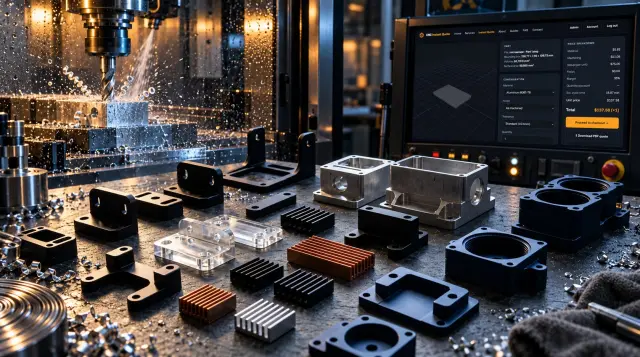
A uniform matte texture that hides tool marks and fingerprints. Adds a small cost and removes a few microns — call out critical dimensions if they are tighter than ±0.02 mm. Often combined with anodizing for a premium look.
See also: cnc machining tariffs 2026
Type II anodizing
The standard for aluminum parts that ship in products: a hard, dyeable oxide layer with strong corrosion resistance. Clear anodize keeps the metallic look; black hides wear best. Remember that anodize is an electrical insulator — mask or spec bare zones for grounding contacts.
Polishing & passivation (copper)
Polishing brings copper to a mirror shine for visible parts; passivation stabilizes the surface for consistent electrical contact and slows tarnish on bus bars and connectors.
See the price impact instantly
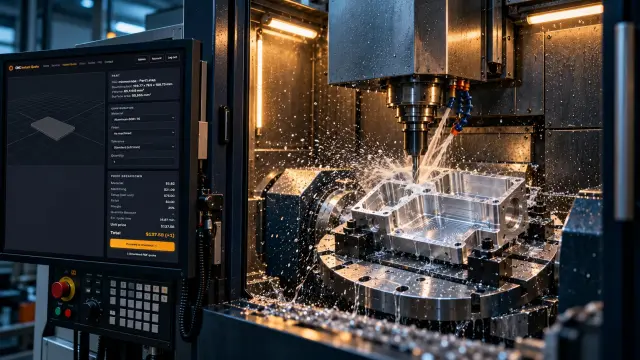
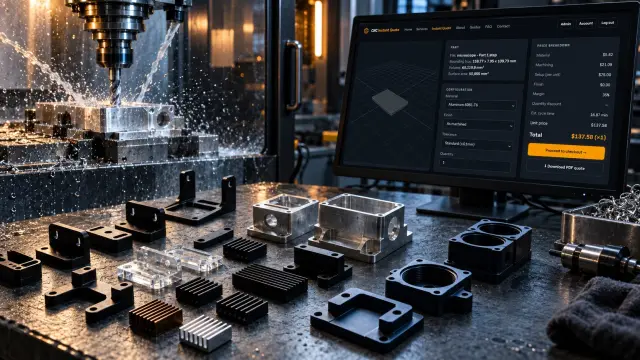
Finish pricing scales with your part's actual surface area — which we compute from your CAD file. Upload your part, switch finishes in the dropdown, and watch the price update live. Questions about a spec? Ask a machinist.
Related guides
Price your part in seconds
Upload a STEP or IGES file — real geometry, real pricing, no waiting.