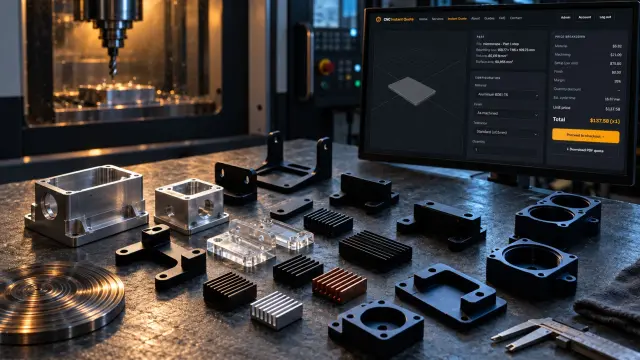
Can CNC Router Cut Aluminum? Fit Your Part
Published 2026-10-17 · Materials
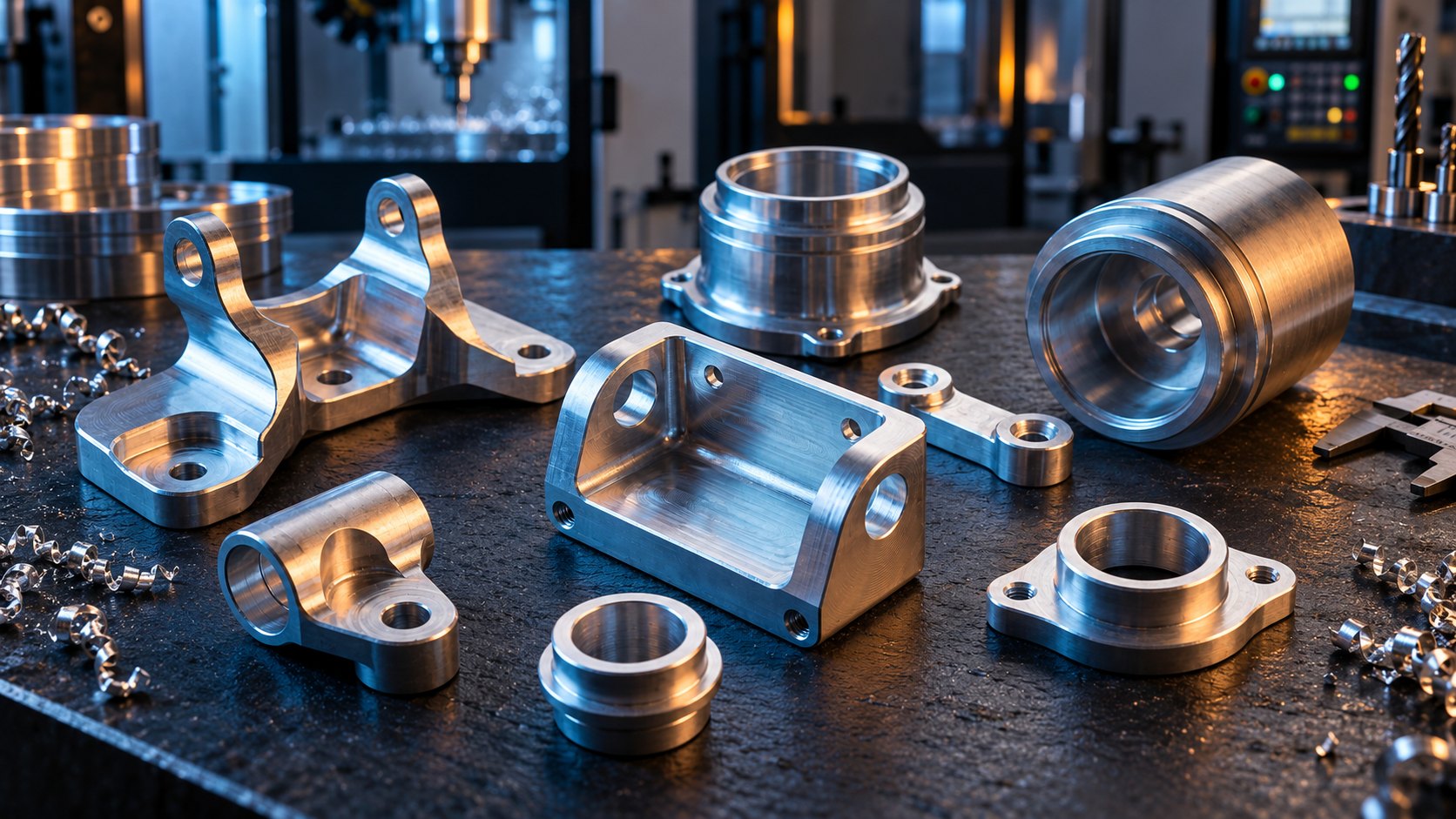
Can cnc router cut aluminum? Yes—if your part is a large panel, outside profile, engraving job, or shallow-pocketed sheet and the setup controls chips and holding. Quick CNC’s concrete case is 1/8 inch aluminum, equal to 3.175 mm. Deep pockets, accurate bores, tight tolerances, and heavy material removal can move the job to a mill.
At quote stage, judge the hardest feature rather than the material label. Alloy, temper, thickness, feature depth, smallest radius, and tolerance tell you whether a router-class process is plausible. We use that screen before quoting CNC milling and turning in aluminum, copper, brass, steel, and plastics from CAD geometry.
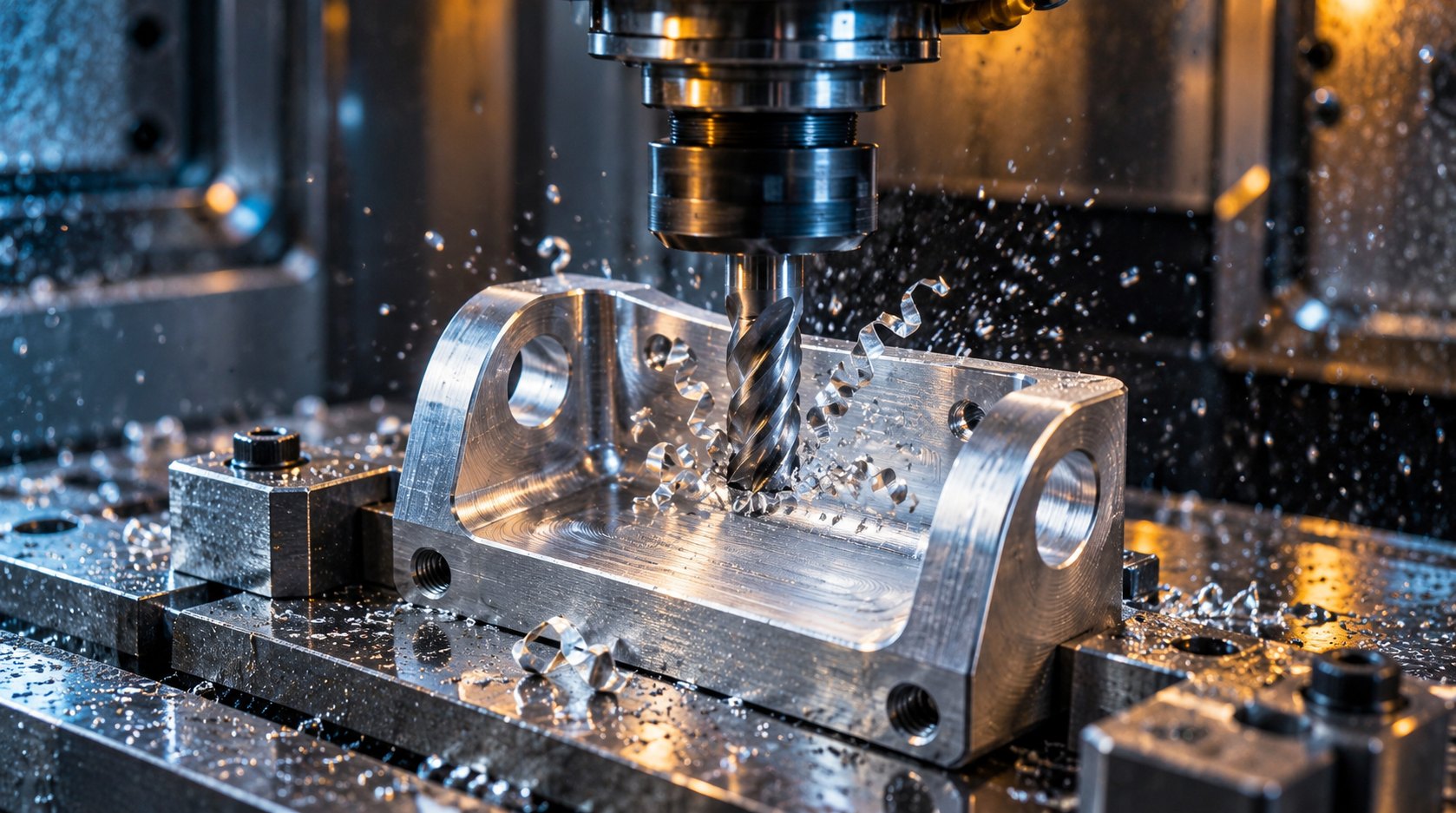
Can cnc router cut aluminum for your part?
Yes, a properly configured router can suit large panels, outside profiles, engraving, and shallow pockets. The decision changes when your drawing adds deep pockets, accurate bores, tight positional tolerances, or heavy removal.
| Feature on your CAD | Router fit | Use when |
|---|---|---|
| Large flat panel or outside profile | Strong candidate | The part benefits from working area and the profile is supported during the final pass. |
| Engraving or shallow pocket | Plausible | The depth is controlled with multiple passes and chips can leave the cut. |
| Deep pocket or heavy removal | Process review required | The cutter engagement and rigidity may exceed a router-class setup. |
| Accurate bore or tight hole position | Mill review | The bore or positional tolerance controls the process, even if the outline is simple. |
Quick CNC makes the same distinction: a flat 3.175 mm panel with profiles may fit a router, while a compact part with difficult bores may not. If the machine choice is still unclear after you mark the three hardest features, compare your geometry with CNC Router vs Mill: Choose from Your CAD.
Which aluminum parts fit a router at quote stage?
A router is most plausible for aluminum sheet, selected profiles, and shallow features that do not require sustained heavy cutting. MNT identifies 5052 sheet at 1–10 mm and 6063 profile as plausible router work, while thick 6061 plate and structural parts need greater rigidity.
Read the drawing in millimeters, not only thickness
For cnc router aluminum sheet work, a 1/8 inch aluminum CNC part is 3.175 mm thick and often suits profiles or light pockets. 5 mm aluminum routing can also be plausible, but the alloy, temper, deepest feature, and smallest released section still control the quote.
| Drawing signal | Likely process screen | Decision |
|---|---|---|
| 5052 sheet, 1–10 mm, outside profile | Router feasibility review | Use when the profile remains supported and the tolerance is moderate. |
| 6063 extruded profile | Router feasibility review | Use when the section is rigidly held and the cut is accessible. |
| 6061-T6 plate with deep pockets | Greater rigidity review | A mill is more likely as depth and cutting load increase. |
| 3.175 mm or 5 mm sheet with shallow features | Router candidate | Confirm holding, chip evacuation, bore requirements, and final-pass stability. |
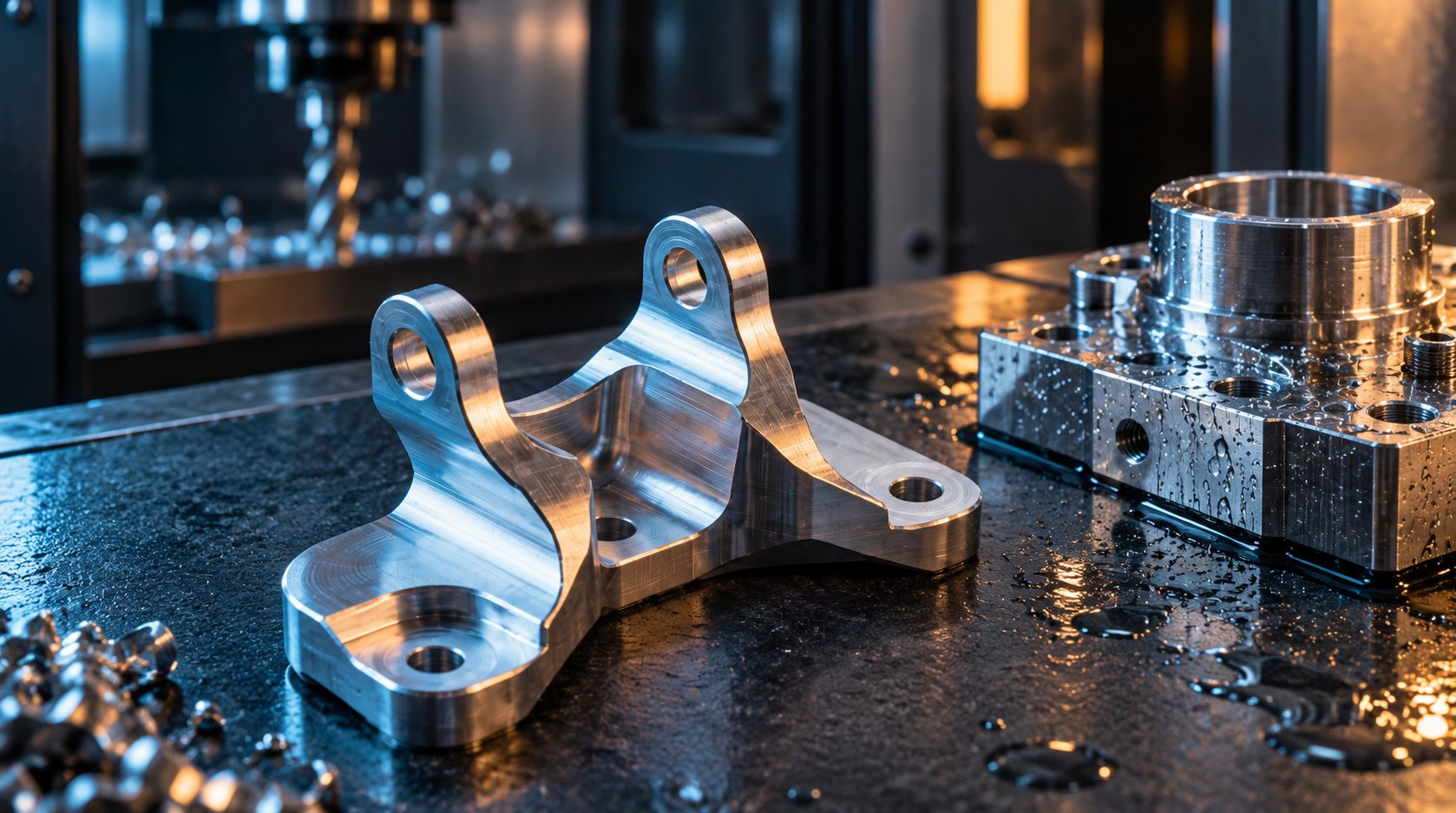
What router settings cut 6061 without rubbing?
For 6061, MachinePicker gives a practical router starting point of a 1/4 inch single-flute carbide cutter at 10,000 RPM, 25–35 IPM, or 635–889 mm/min, with 0.020–0.040 inch, or 0.508–1.016 mm, depth per pass.
Use the setup as a starting envelope
- Cutter: 1/4 inch single-flute carbide, with short tool projection and a sound collet.
- Spindle: 10,000 RPM for the MachinePicker starting example.
- Feed: 25–35 IPM, equal to 635–889 mm/min, then tune from chip shape and machine load.
- Depth per pass: 0.020–0.040 inch, equal to 0.508–1.016 mm.
- Chip control: use air or approved lubrication suited to the machine, enclosure, and extraction setup.
Low feed creates rubbing instead of shearing. The result is heat, welded chips, and a damaged cutting edge. Poor holding creates chatter or a snapped cutter. These values are a starting envelope, not a universal thickness limit.
- Fixture the workpiece with positive restraint and safe cutter clearance. Failure mode: movement during the final profile pass causes chatter or a snapped cutter.
- Start near the 10,000 RPM and 25–35 IPM example. Failure mode: low feed reduces chip thickness, causing rubbing and heat.
- Keep chips moving with suitable air or lubrication. Failure mode: recut chips weld to the cutter and mark the surface.
- Measure the critical feature after the test cut. Failure mode: a clean-looking profile can hide an inaccurate bore or position.
When should you route aluminum or send it to a mill?
Send the job to a mill when the deepest pocket, accurate bore, tight tolerance, or heavy removal controls the process. Keep the router in consideration for supported sheet profiles and shallow features. Thick 6061 plate and structural parts need greater rigidity, as MNT notes.
| Hardest feature | Router signal | Quote-stage decision |
|---|---|---|
| Outside profile in 3.175 mm sheet | Large, supported, low cutting load | Router candidate. |
| Shallow pocket in 5 mm sheet | Depth fits controlled passes | Router review with chip and holding checks. |
| Deep pocket | Long engagement and high side load | Mill review. |
| Accurate bore or tight positional tolerance | Geometry may exceed router repeatability | Mill review or an agreed secondary operation. |
| Thick 6061 plate or structural feature | High rigidity requirement | Greater-rigidity process review. |
An anonymized CAD example from CNC Instant Quote
One anonymized review involved 6061-T6 plate at 5 mm thickness. The deepest feature was a 2.5 mm pocket, and the smallest internal radius was 1.5 mm. The outside profile and pocket were router candidates. A Ø6.00 mm bore with a ±0.03 mm diameter requirement determined the process, so the part moved to a milling setup.
That is the quote-stage rule: identify the feature that can fail, then choose the process around it. If a wall, hole, or pocket drives cost, review CNC Machining Design Mistakes Cost You More Than You Think before changing the machine assumption.
FAQ: Can a CNC router cut aluminum?
Yes, a CNC router can cut aluminum when the alloy, thickness, feature geometry, holding, chip control, and tolerance fit the setup. The hardest feature—not the sheet thickness alone—should determine the process.
Can a router cut 1/8 inch aluminum?
Often, yes. 1/8 inch aluminum is 3.175 mm, a practical starting case for outside profiles, engraving, and shallow pockets when the sheet stays supported.
Is 5 mm aluminum routing practical?
It can be practical for suitable 5052 sheet, 6063 profile, or selected 6061 parts. Review the deepest feature, smallest radius, bore requirements, and final-pass holding before approval.
What causes aluminum to weld to the cutter?
Low feed, excess heat, and poor chip evacuation cause rubbing and built-up welded chips. Raise chip thickness within the machine’s limits, control the cut depth, and clear chips before they recut.
Conclusion: decide from the hardest feature
A router can be the right process for 3.175 mm panels, selected 5 mm work, profiles, engraving, and shallow pockets. Deep pockets, accurate bores, thick 6061 plate, and structural features deserve a mill review. Upload your STEP file for an instant CAD-based quote, then review our CNC routing machines for process scope →
Related guides
Price your part in seconds
Upload a STEP or IGES file — real geometry, real pricing, no waiting.