
CNC Quote Stock Size Changes Aluminum Pricing
Published 2026-09-14 · Materials
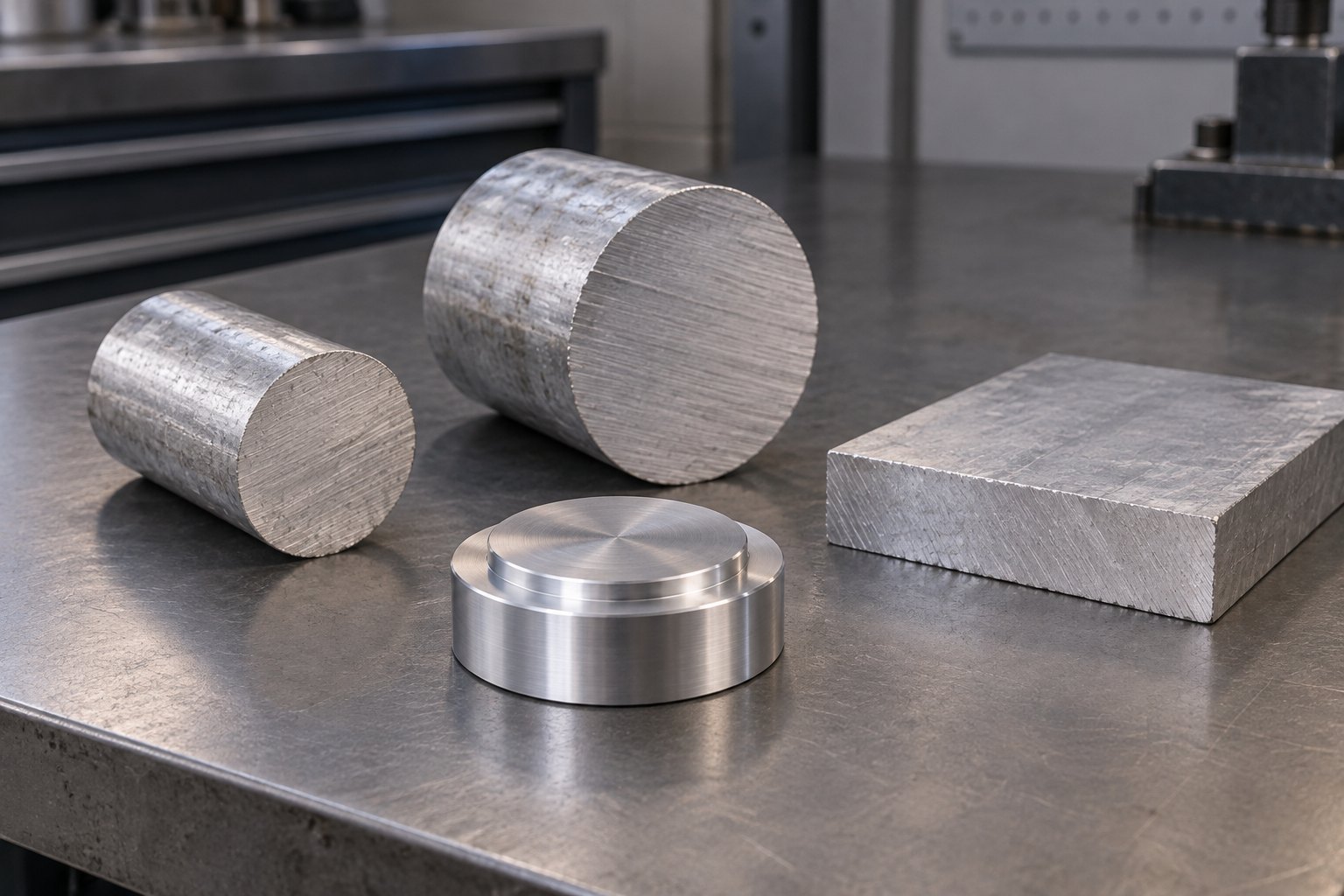
A CNC quote stock size can change the price of a simple aluminum part. The finished geometry may stay identical, but the blank can require more material, another setup, or a different purchasing route. That is why two valid quotes can disagree without either shop making a calculation error.
I’m Ashkan, a CNC engineer at CNC Instant Quote. The recurring raw-aluminum-bar question is usually a stock-selection question. Your material callout needs the alloy, condition, form, and preferred dimensions. The right blank makes the part practical before cutting begins.
What CNC quote stock size really includes
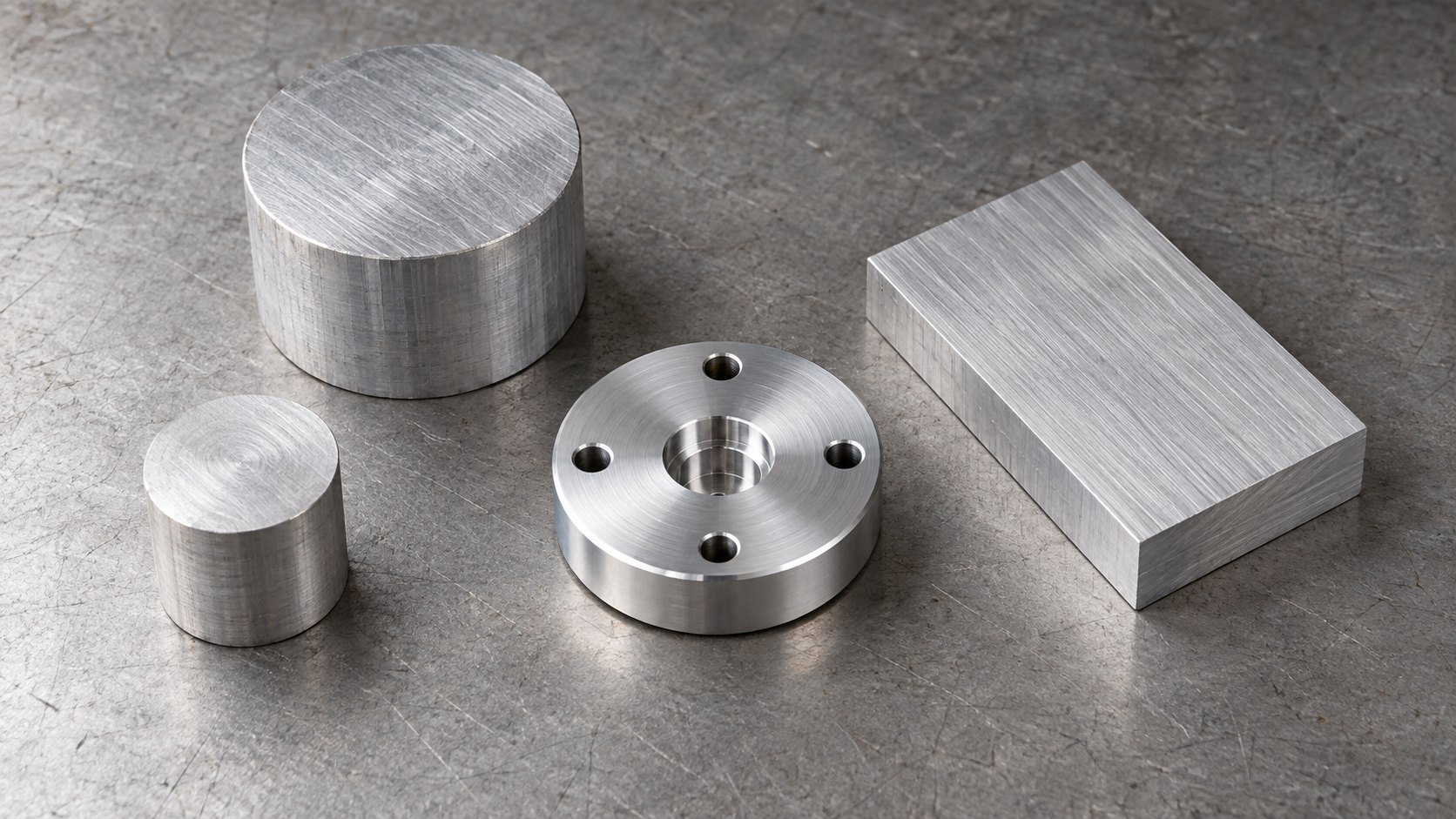
Stock size is more than a number beside an alloy. It describes the starting form that your machinist must buy, cut, hold, and remove. A complete callout might read 6061-T6 aluminum, 30 mm round bar, 65 mm cut length. It might instead specify 6061-T6 plate, 20 mm thick, with a 100 mm by 80 mm minimum blank.
The Industrial Web Search RFQ guide, CNC Machining RFQ: What to Send, Ask, and Compare, makes the same practical point. Alloy alone does not describe the material fully. Temper can affect machining behavior, and bar, plate, tube, and other forms can carry different costs and constraints.
The condition matters because 6061-T6 is not the same purchasing assumption as annealed 6061. The form matters because a round bar feeds a lathe naturally, while plate usually suits a mill. Starting stock can also determine whether your geometry is reachable, rigidly held, and economical to produce.
Why the blank is part of the manufacturing route
CloudNC’s guide, How to quote CNC machining jobs: a practical estimating guide, treats the stock form and likely blank size as early estimating inputs. Its guidance also notes that material should reflect stock you can actually purchase, not only the finished model volume.
That distinction affects your raw material CNC cost. A 24 mm finished diameter does not automatically mean a 24 mm blank. You need material for facing, clamping, saw-cut variation, and the final cleanup pass. A quote based on finished volume alone is usually too optimistic.
One geometry, three aluminum stock size assumptions
Consider one small mounting puck: 24 mm finished diameter, 18 mm finished thickness, a 10 mm through-hole, and four 4.5 mm holes on an 18 mm bolt circle. The same CAD geometry can be evaluated in CNC Instant Quote against three starting-stock choices.
- 30 mm 6061-T6 round bar — This is the natural blank for the diameter. A shop still adds length for two saw cuts, facing, and secure chuck or vise engagement.
- 40 mm or 50 mm 6061-T6 round bar — The part still fits, but the larger diameter creates more radial excess. Roughing removes more aluminum, and the supplier may charge more for the larger bar.
- 20 mm 6061-T6 plate — This can work for the puck if the shop mills the circular profile from plate. It may reduce diameter waste, but it can add workholding, contouring, and a second-side setup.
The 30 mm bar case is often the cleanest route, but it is not automatically the cheapest delivered result. Buy-to-size availability can reverse the order. If 30 mm bar is unavailable locally, the shop may buy 40 mm stock immediately, wait for a saw mill, or purchase a longer bar than the job needs.
The 20 mm plate option illustrates why a CNC quote stock size needs a form, not just a thickness. Plate can be economical when a standard sheet is already available and the part is easy to hold. It can cost more when the shop must buy a full plate, cut a small blank, or add a setup for the underside.
Availability, waste, and setup change the answer
A useful CNC quote stock size assumption has three tests: can the supplier provide it, can the blank be cut without excessive waste, and can the part be held with the planned operations? A low-cost theoretical blank fails if it is not available in the required condition or length.
CloudNC identifies unavailable material in the assumed stock size as a common quoting delay. It also says material price and lead time depend on supplier availability. That is why an instant quote may use a practical stock assumption while a production quote still includes an availability caveat.
What to record in your RFQ
Specify the smallest acceptable blank only when you know the geometry supports it. Otherwise, give a preferred dimension and allow the shop to propose the next purchasable size. State whether saw-cut allowance is included. State whether certification, traceability, or a customer-approved supplier is required.
- Alloy: for example, 6061 aluminum.
- Temper or condition: for example, T6.
- Stock form: round bar, rectangular bar, plate, tube, or another form.
- Preferred dimensions: for example, 30 mm diameter round bar or 20 mm plate.
- Allowance: include cut length, facing stock, clamping length, and any finish allowance.
- Flexibility: identify whether the shop may use the next available size.
- Documentation: list material certificates, traceability, or inspection records.
This information improves your aluminum stock size decision before you upload the model. It also lets the estimator separate material uncertainty from machining uncertainty. Our CNC milling and turning services cover aluminum, copper, brass, steel, and plastics quoted from CAD geometry, but the blank still needs a workable assumption.
FAQ: CNC quote stock size questions
Does a larger bar always produce a higher quote?
No. A larger bar usually adds material and roughing time, but an available 50 mm bar can beat an unavailable 30 mm bar once purchasing delay and minimum order costs are included.
Why can a 6061-T6 bar quote differ from a plate quote?
The form changes the route. Bar may suit turning with one efficient setup. Plate may suit milling but require contouring, extra workholding, and a second operation.
Should you specify an exact stock size?
Specify it when the design or supplier requires it. Otherwise, give a preferred size plus an acceptable range. That allows the quote to reflect realistic buy-to-size availability.
Give your quote a workable starting point
A reliable CNC quote stock size starts with four details: alloy, temper, form, and dimensions. Add saw allowance and say whether a nearby available size is acceptable. For a direct comparison, get an instant CNC quote from your CAD geometry and review the stock assumption before ordering. If the part has unusual holding or access limits, check our machining FAQ or contact the team. →
Related guides
Price your part in seconds
Upload a STEP or IGES file — real geometry, real pricing, no waiting.