
CNC Online Quote Threads: Avoid Clarifications
Published 2026-09-20 · Design Tips
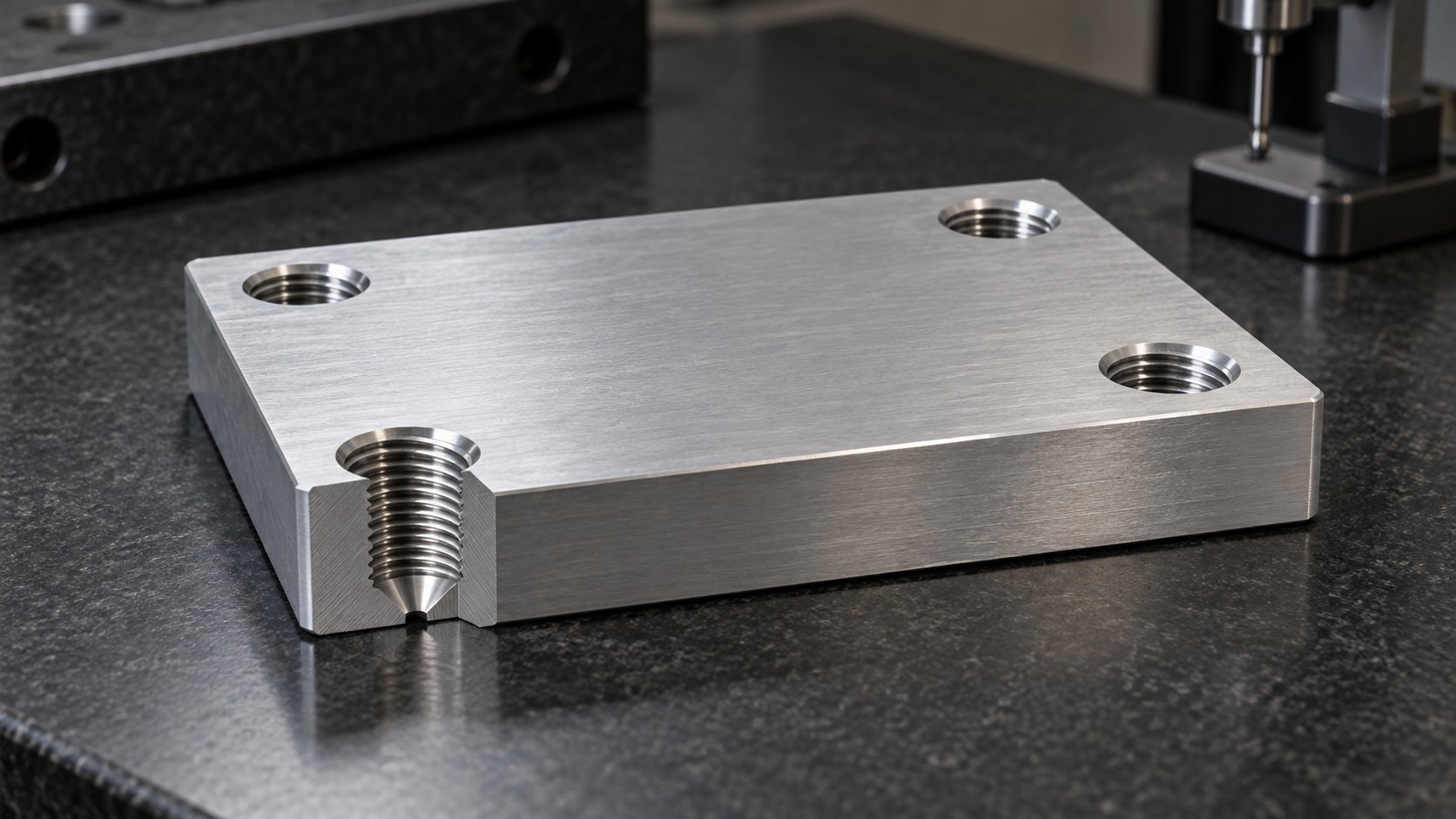
For cnc online quote threads, a STEP model is not enough: your callout must identify the thread standard, size, class of fit, and full thread depth. Without those fields, the quote may price a drilled hole, apply a default fit, or stop for engineering review. That distinction explains many clarification requests.
The practical issue is thread definition, not file upload. I write this from the quoting side as Ashkan, CNC engineer, because a small missing detail can change the machining operation, inspection plan, and price.
What do cnc online quote threads need?
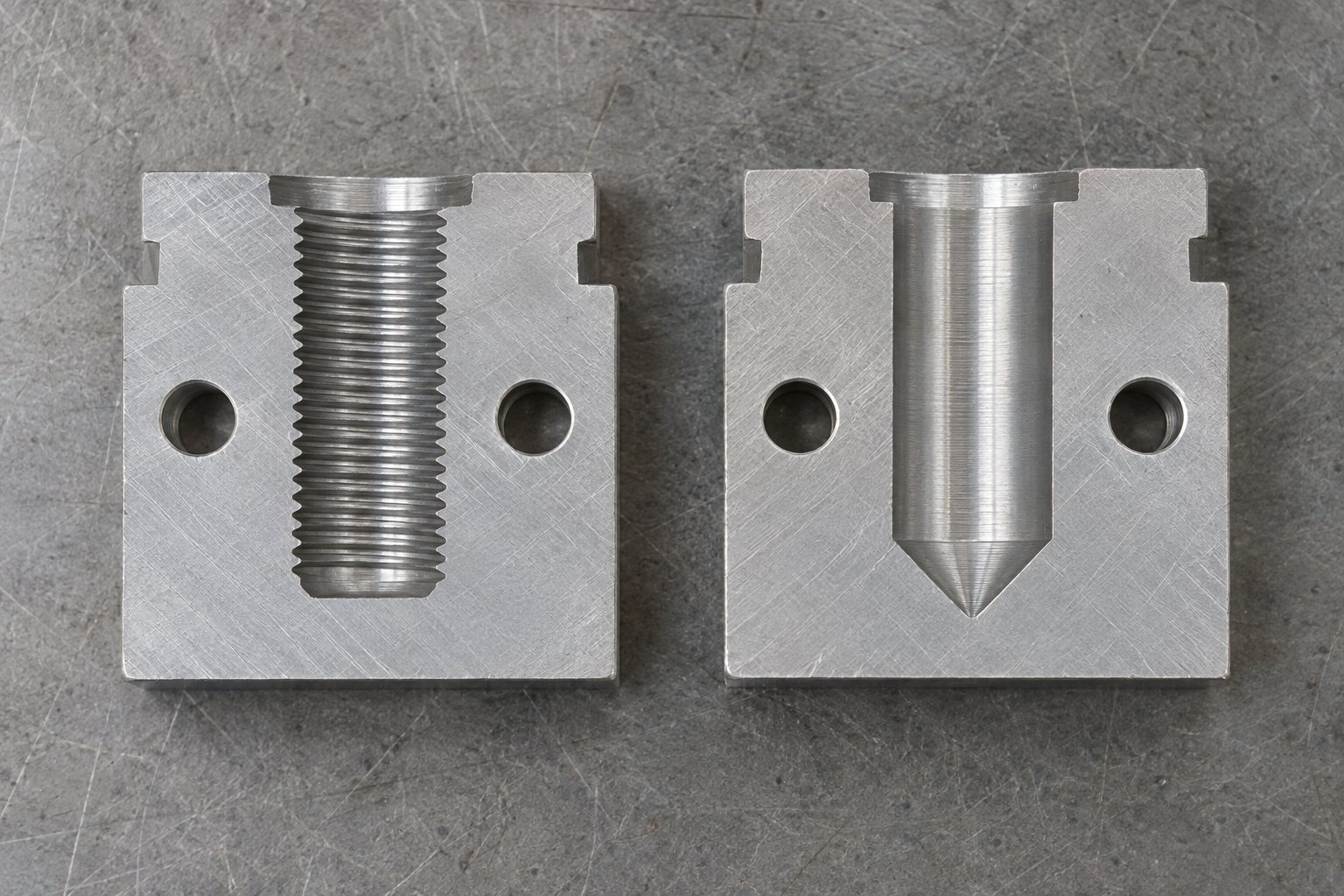
A complete CNC thread callout states the thread standard and size, thread class of fit, and full tapped hole depth. Add thread length and quantity when they affect tooling, inspection, or setup time.
Industrial Web Search's CNC Machining RFQ guide says the quote package should state the thread standard, class of fit, and full thread depth—not only the drilled-hole depth. GWS Tool Group's current thread request form also asks for thread form, size, TPI, class of fit, tapping depth, thread length, and quantity.
| Input | Complete example | What it controls | Use when |
|---|---|---|---|
| Thread form and size | M6×1 internal metric | Nominal diameter and pitch | Every tapped feature |
| Thread class of fit | 6H | Internal thread tolerance | Mating hardware or functional fit matters |
| Full thread depth | 12 mm | Usable engaged length | The hole is blind or load-bearing |
| Quantity | 4 holes | Tooling and setup allocation | The same feature repeats on the part |
- Specify the governing thread standard, such as an ISO metric designation.
- State the pitch for metric threads or TPI for inch threads.
- Give the internal thread class, such as 6H, rather than leaving fit to a default.
- Separate full thread depth from the total drilled-hole depth.
- State thread length and quantity when they differ from the model's obvious geometry.
Why does a STEP file miss thread intent?
A STEP file can show the boundary of a hole without reliably preserving the manufacturing intent behind it. A cylindrical void may represent a drilled hole, a tapped hole, or a modeled thread with no stated fit.
Jinke CNC recommends sending a 2D PDF with information the model may not communicate reliably, including threads, GD&T, critical tolerances, inspection points, and production notes. If the model and drawing disagree, state which revision controls. That drawing is where your CNC thread callout should be unambiguous.
For capability context, CNC Instant Quote supports milling and turning in aluminum, copper, brass, steel, and plastics, with pricing generated from CAD geometry. The thread specification still determines what operation the geometry represents. See the CNC milling and turning capabilities for the process range.
How deep should a tapped hole be?
Full tapped hole depth is the length of usable thread engagement, not simply the depth of the drill. RapidDirect gives a practical starting reference: threads from 1.5–5 mm often use about 3× diameter, while threads 5 mm and larger often start around 4–6× diameter.
For example, M6×1-6H with 12 mm full thread depth in a 6061-T6 mounting plate is a usable quote input. Twelve millimeters equals 2× the nominal diameter, so it is below the 4–6× starting range cited by RapidDirect for threads 5 mm and larger. Treat that as a joint-load decision, not an automatic default.
| Thread diameter | Starting depth reference | Quote decision |
|---|---|---|
| 1.5–5 mm | Around 3× diameter | Use as an early design reference, then verify engagement |
| 5 mm and larger | Around 4–6× diameter | Use for deeper engagement where wall thickness and load allow |
| Specified design value | Example: 12 mm full thread | Quote the stated value and review load, clearance, and drill depth |
What triggers review in an instant quote?
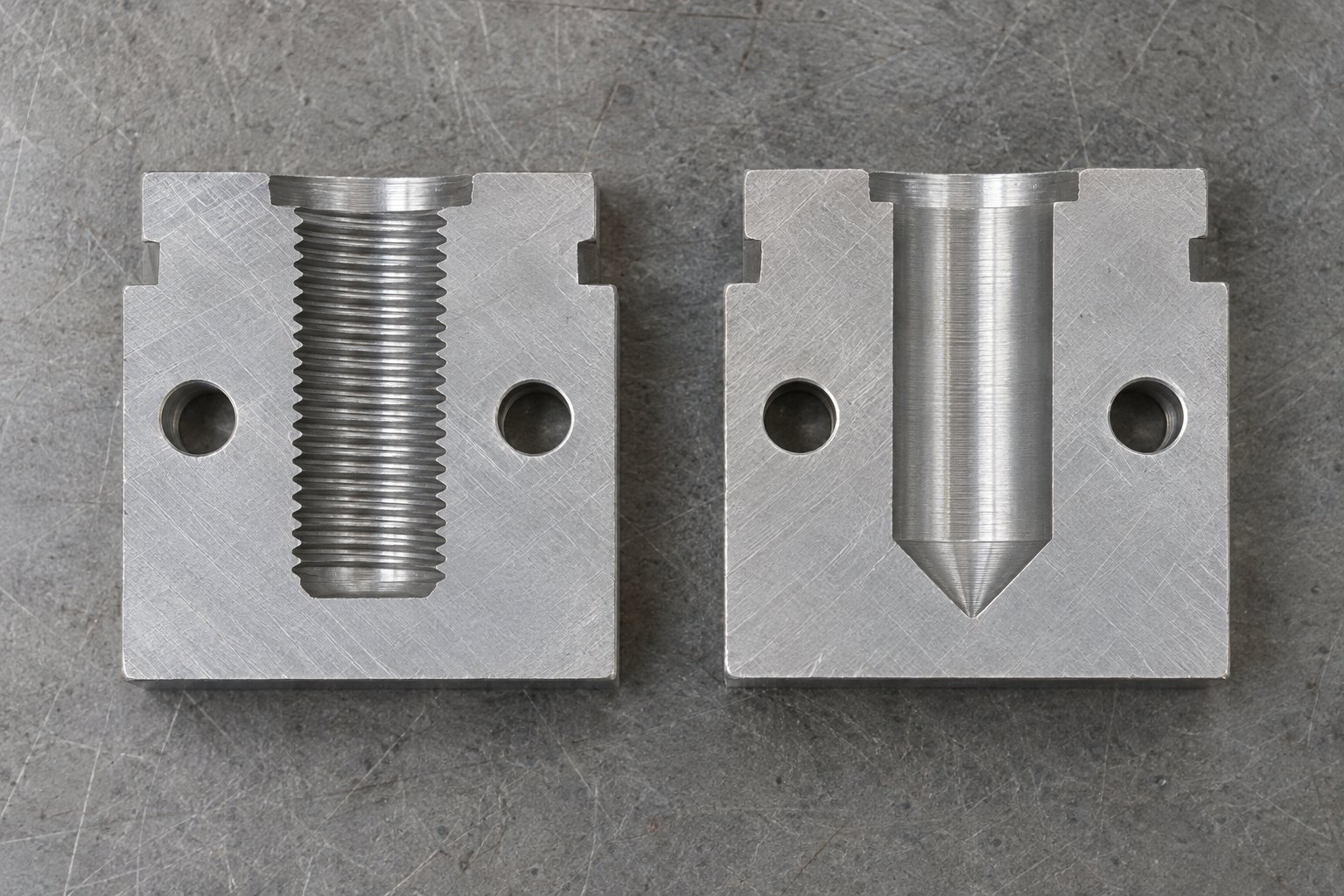
Missing thread class or depth creates a pricing ambiguity. The quote engine may price drilling only, assume a default fit, or stop for engineering review because it cannot select the correct tap, inspection method, or usable engagement.
In an anonymized CNC Instant Quote example, a 6061-T6 mounting plate with four holes called out as M6×1-6H with 12 mm full thread depth returned an instant threaded-feature price. The same geometry described only as four blind Ø6.0 mm × 12 mm holes changed to drilling-only pricing with an engineering-review flag.
The geometry did not change. The manufacturing meaning changed. A missing thread class affects fit, while a missing full depth affects engagement and tapping feasibility. Either omission can move the part from automatic pricing to clarification.
- Identify the thread form, size, pitch, or TPI. Failure mode: the system cannot select the correct tap.
- State the thread class of fit. Failure mode: a default tolerance may not match the mating fastener.
- Give full thread depth and total drilled depth when they differ. Failure mode: the quote may price drilling without usable threads.
- Add thread length and quantity. Failure mode: tooling, inspection, and setup assumptions remain incomplete.
FAQ about cnc online quote threads
Is a hole diameter enough to price a tapped hole?
No. Ø6.0 mm × 12 mm defines a drilled feature, not an M6×1 thread, 6H fit, or 12 mm full thread depth.
Is 12 mm full thread depth enough for an M6 hole?
It depends on the joint load, material, and available wall thickness. For M6, 12 mm equals 2× diameter, so compare it with the 4–6× starting reference before release.
Should the 2D PDF repeat the thread information?
Yes. Jinke CNC recommends using the 2D PDF for threads, GD&T, critical tolerances, inspection points, and production notes that the STEP model may not communicate reliably.
What if the thread specification is still undecided?
Mark the open choice clearly. A quote can separate confirmed geometry from the missing thread standard, fit, or depth instead of hiding an assumption.
Ready to submit a thread-ready quote?
Give your STEP model a complete thread definition: standard, size, pitch or TPI, class of fit, full tapped hole depth, thread length, and quantity. Then use the thread-ready instant CNC quote form for a price based on the feature you actually need →
Related guides
Price your part in seconds
Upload a STEP or IGES file — real geometry, real pricing, no waiting.