CNC Machining Design Mistakes Cost You More Than You Think
Published 2026-09-10 · updated 2026-10-25 · Design Tips
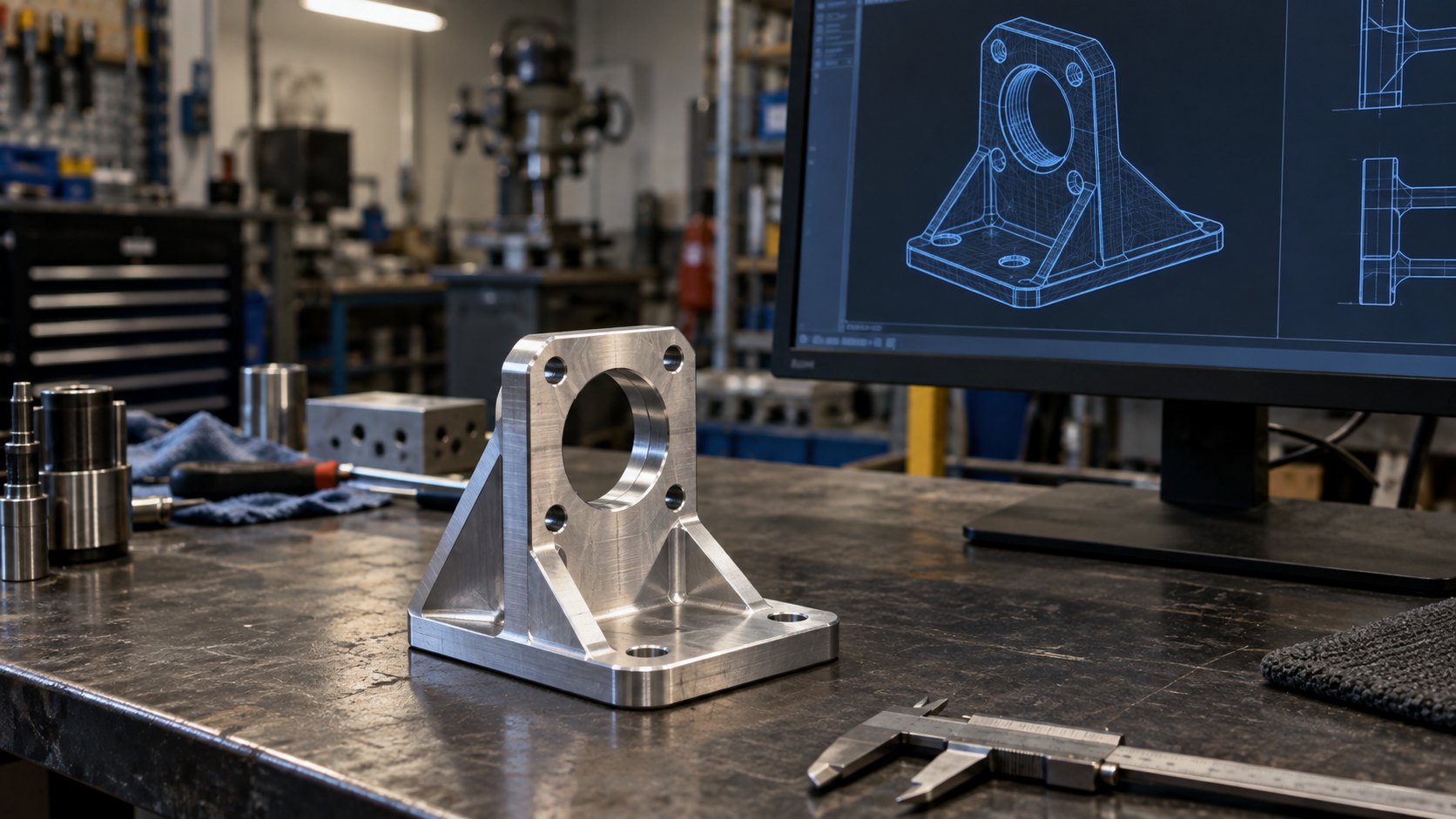
Cnc machining design mistakes cost you in one of three ways. You get a longer cycle time. You get an added secondary operation like EDM. Or you get scrap risk from a broken tap. None of that comes from material choice or lead time. It comes from geometry — the shape your tool has to cut around, into, or through.
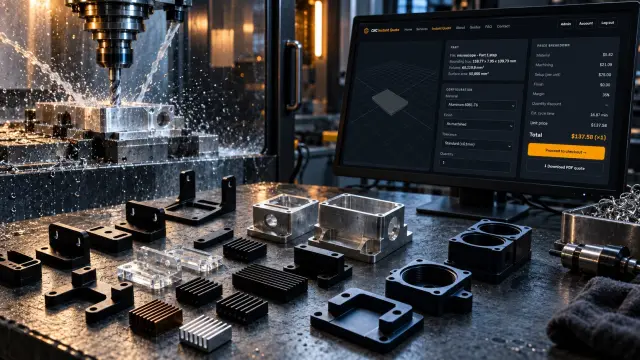
This guide covers the six mistakes we see most in parts quoted through our instant quote engine. Each one has a fix. Our engine reads your STEP file directly. Change a fillet, a tolerance band, or a hole depth, then re-upload. The price updates in seconds. Use this list as a checklist before you order.
Why a routine quote comes back high
Cnc quote too expensive why usually traces back to two or three features. It's rarely the whole part. A bracket with one blanket tolerance, one sharp corner, and a deep pocket can price well above a similar part in the same material. The alloy isn't the problem. The extra passes, tool changes, and setups are.
We see this across parts quoted through our CNC milling and turning services in aluminum, copper, brass, steel, and plastics. Take two versions of the same bracket. One has generic tolerances. One holds tight tolerances only where they matter. The two can differ by 15-25% in machining time alone. That gap is what the rest of this guide breaks down.
See also: copper parts cutting
3 CNC machining design mistakes cost the most in setup time
Blanket tolerances instead of critical-only
Applying one tight tolerance to every dimension is the biggest cost driver we see. A default tolerance of ±0.13 mm (±0.005 in) machines fast on almost any 3-axis setup. Tighten that to ±0.02 mm (±0.0008 in) across the whole part. Every dimension then needs slower feeds and more inspection. Hold the tight band only on the two or three features that mate or move. Leave the rest at default. That one change can cut machining time by 15-25% on a typical bracket.
Sharp internal corners
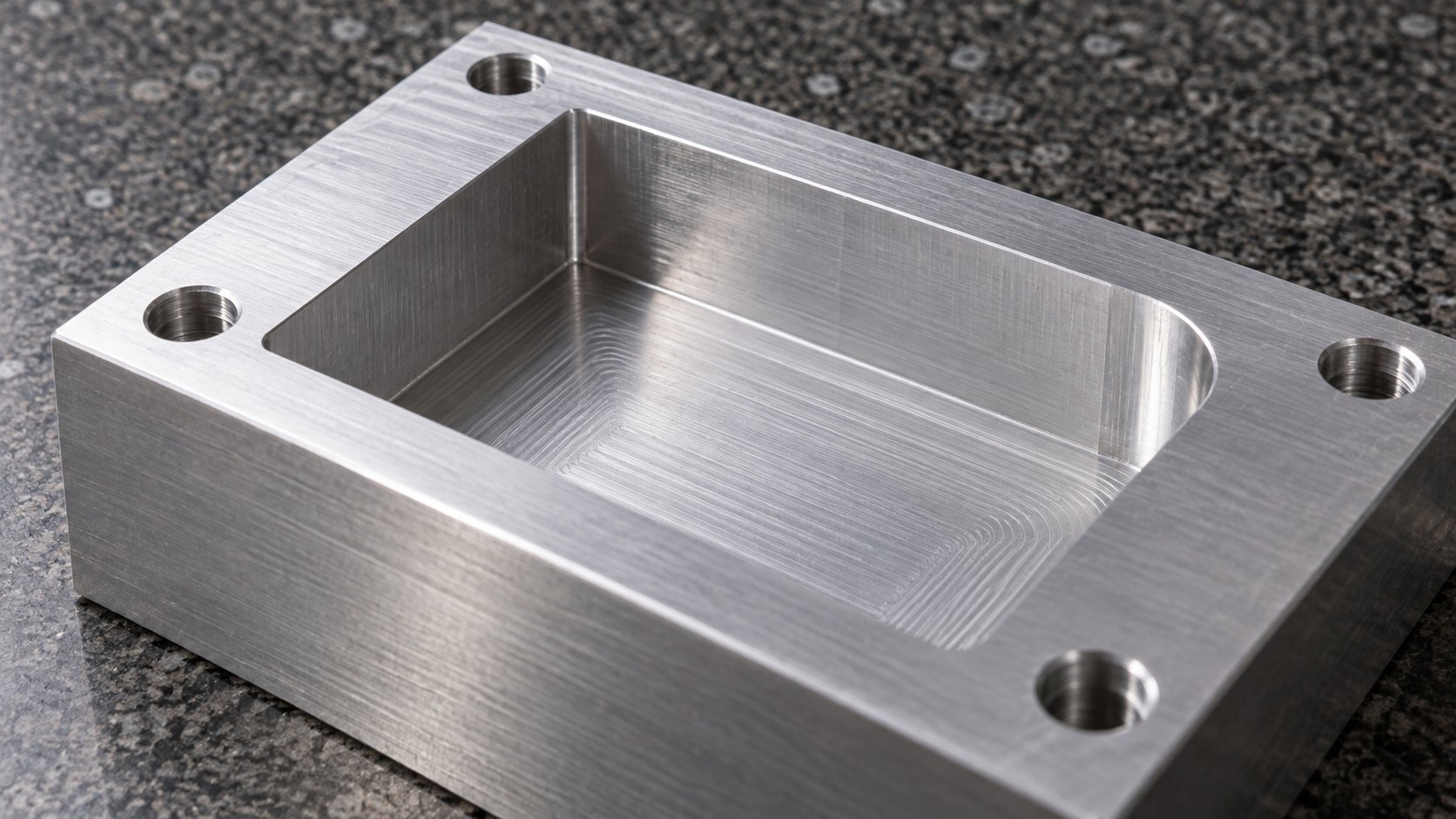
A milling cutter is round. It can't cut a sharp internal corner. It leaves a radius equal to its own radius, at minimum. Specify a true 90° internal corner, and the shop has two options. One is undersized tooling that slows the cut. The other is a secondary EDM operation that adds days and a line item to your quote. Add a radius at least 30% larger than the tool radius instead. If your pocket is cut with a 10 mm tool, a 13 mm corner radius keeps the job in one operation.
Deep, narrow pockets
Deep, narrow pockets force the shop to use a long, thin end mill. Long tools deflect and chatter. The machinist slows the feed rate to hold tolerance. As a rule, cavity depth beyond 3-4 times the tool diameter starts costing you real cycle time. A 6 mm pocket cut 40 mm deep needs a length-to-diameter ratio most 3-axis setups can't run at full speed. Widen the pocket or shorten the depth. The same feature then machines in a fraction of the time.
3 more mistakes that add scrap risk and secondary ops
Thin walls and irregular shapes
Thin walls and irregular outer profiles make a part hard to hold in a fixture. Metal walls under 0.8 mm flex under clamping pressure. They chatter under the tool too. That shows up as a poor surface finish or a part that's out of tolerance once unclamped. Irregular shapes with no flat, parallel reference faces need custom fixturing or extra setups. Add a flat reference face and keep metal walls at 0.8 mm or thicker. The part then locates the same way every time.
Tapped holes drilled to thread depth
When the drilled hole matches the required thread depth, chips have nowhere to go. They pack at the bottom of the hole. That can snap the tap off inside the part. At that point the part is scrap, not a rework. Drill 0.5-1.0 mm deeper than the thread depth you need. On a blind hole needing 12 mm of thread, drill to at least 13 mm. That small allowance is the difference between a clean tap and a broken one.
Non-standard hole sizes
Standard drill sizes — the fractional and metric sizes a shop keeps on the shelf — drill in one pass. A hole that's 0.1 mm off a standard size needs an end mill run in a helical path instead. That takes far longer than a single drill cycle. This matters most on parts with a dozen or more holes. Round hole diameters to the nearest standard size wherever the design allows it. Save custom sizes for the one or two features that actually need them.
A worked example: one tolerance, 25% off the time
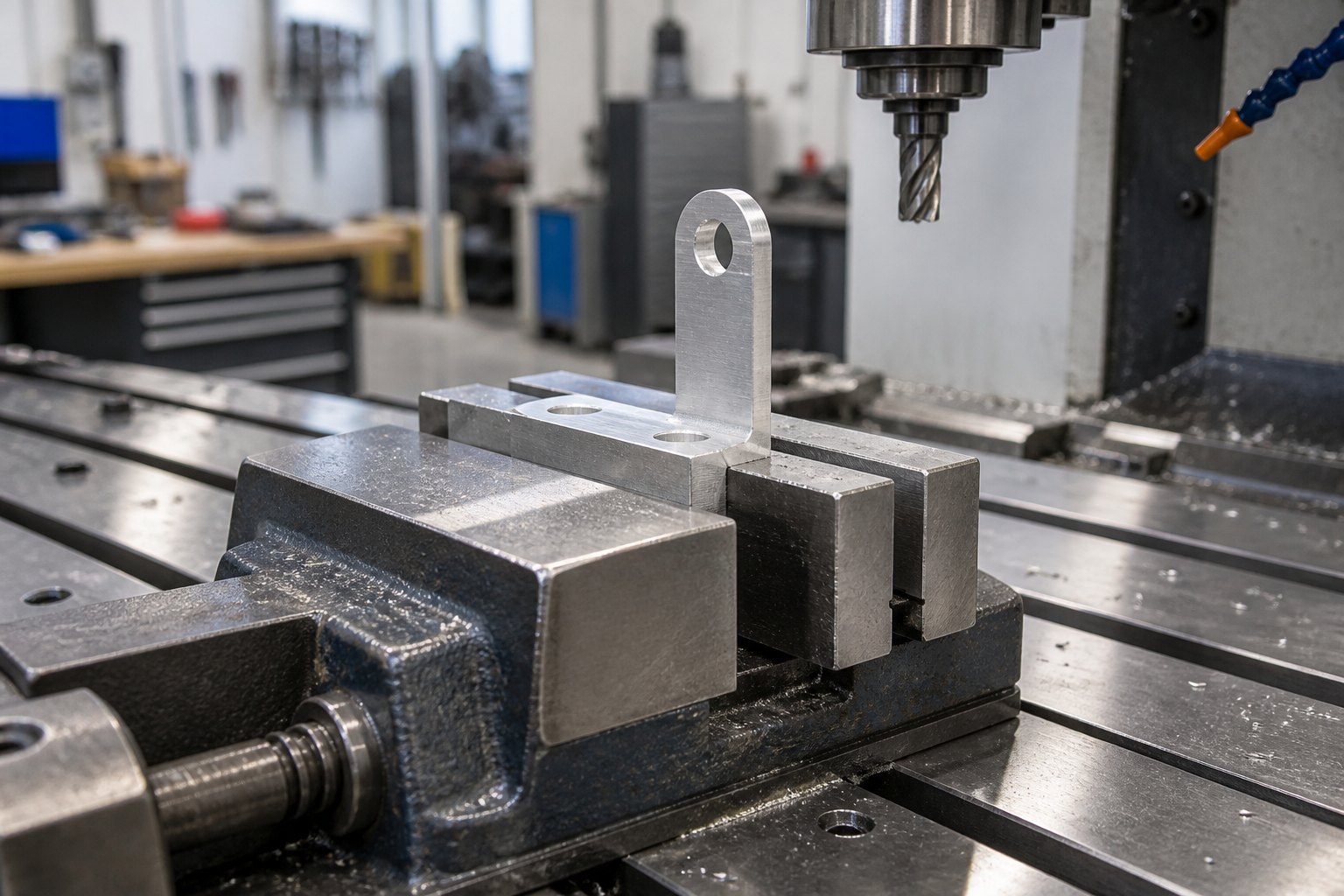
Here's a real comparison from our own quoting data. Take a 6061-T6 aluminum plate, 100 x 60 x 10 mm, with one non-critical bore that doesn't mate to anything. Hold that bore at ±0.02 mm, and the quote engine assigns a finishing pass with 100% inspection. Machining time runs around 18 minutes. Relax the same bore to ±0.05 mm instead. It drops into the standard-tolerance pass with spot-check inspection. Machining time drops to about 13 minutes. That's roughly 25% off one feature. It's the fastest way to reduce cnc machining cost design decisions without touching material or finish.
See also: Aluminum 6061 vs 7075 for CNC Machining: How to Choose
Checklist before you upload
These design for manufacturing cnc tips are the same checks our engine runs on every STEP file you upload. See our FAQ for more on how the pricing logic works. Go through your model against this list first:
- Tight tolerances (under ±0.05 mm) held only on mating or moving features
- Internal corner radii at least 30% larger than the tool that will cut them
- Pocket depth under 3-4 times the pocket width or tool diameter
- Wall thickness at or above 0.8 mm in metal, 1.5 mm in plastic
- Drilled holes at least 0.5 mm deeper than the thread depth they carry
- Hole diameters rounded to standard drill sizes where function allows
FAQ
Does a tighter tolerance always cost more?
Yes, once it goes below the ±0.13 mm (±0.005 in) default. Every dimension held tighter than that needs slower feeds and more inspection time. Hold tight tolerances only where a part mates or moves.
Why did my quote jump when I added a sharp corner?
A milling cutter can't cut a true square internal corner. The engine flags it for a secondary EDM pass. That adds both cost and lead time. Add a radius sized to the tool instead.
How deep can a pocket go before it costs more?
Past 3-4 times the tool diameter, tool deflection and slower feeds start adding cycle time. Widen the pocket or shorten it if you can.
Can I check the cost impact before I order?
Yes. Upload your STEP file, change one feature, and re-upload it. The price updates in seconds, so you can compare versions before you commit.
Get a new price in seconds
Every mistake on this list shows up as a number on your quote, not just a shop-floor rule. Fix the geometry, and the number moves. Upload your STEP file to our instant quote tool, adjust one feature at a time, and watch which ones actually move your price →
Related guides
Price your part in seconds
Upload a STEP or IGES file — real geometry, real pricing, no waiting.