CNC Services Audit: Follow the Order Trail
Published 2026-09-21 · updated 2026-09-22 · Machining Guides
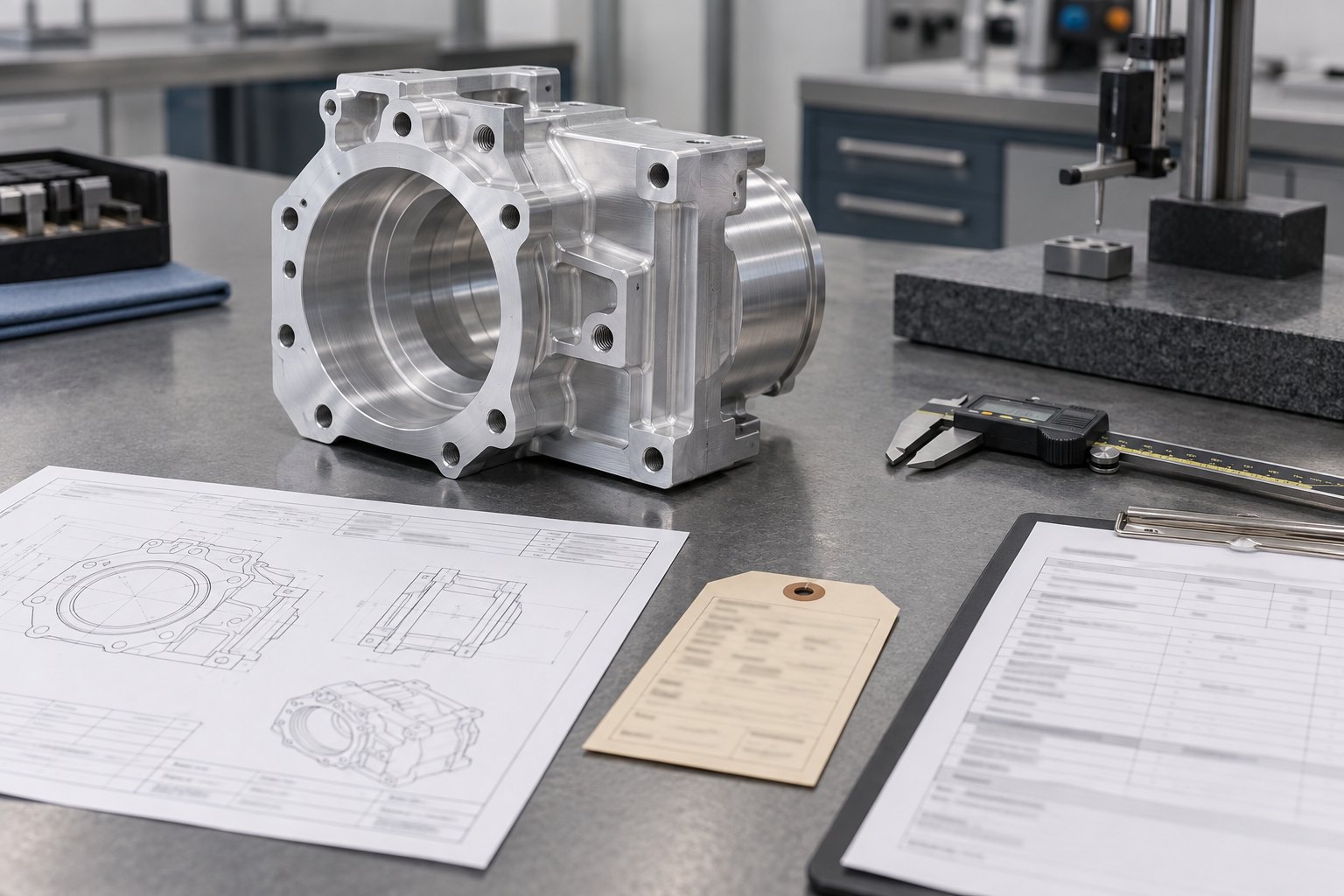
A CNC services audit should follow one real order from CAD revision to release record. Check the material grade and heat or lot, machining route, inspection method, and any change review. That trail shows whether the supplier controls your part, not just whether a certificate or checklist exists.
ISO 9001:2026—Edition 6—was published on 16 September 2026. ISO says transition timing depends on your certification cycle. ISO 19011:2026—Edition 4, published in May 2026—explicitly covers second-party audits of external providers. I’m Ashkan, CNC engineer at CNC Instant Quote. I use clauses 3.1, 5.3, and 6.3–6.5 to read the order trail.
What does a CNC services audit actually verify?
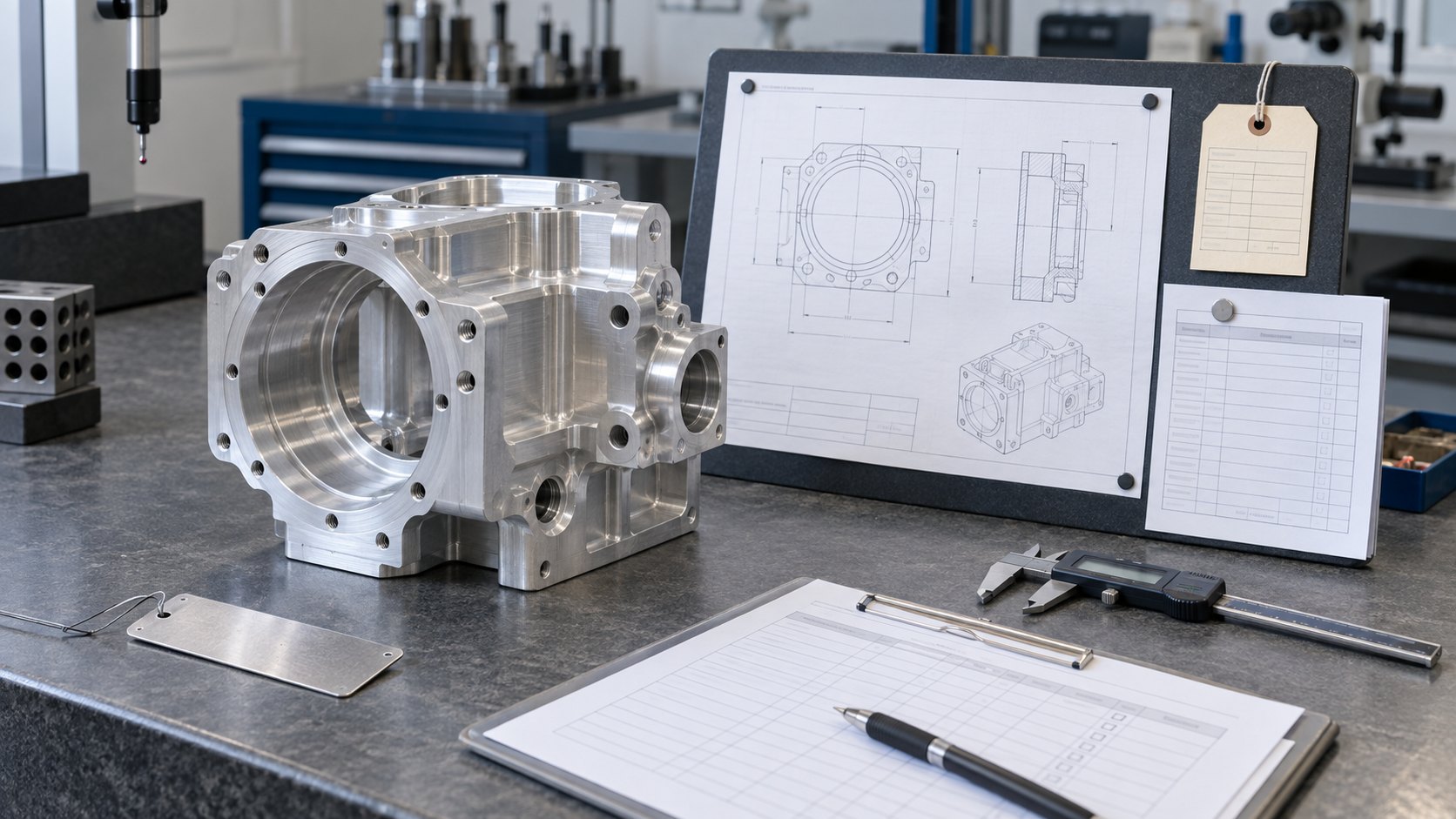
A CNC services audit verifies that the supplier can connect the requirement you approved to the part it released. A CNC supplier audit is strongest when each answer points to an order record, not a general promise.
LKprototype’s CNC Machining Manufacturer Audit: 12 Questions to Ask covers useful questions about machines, drawing revisions, inspection methods, and outside partners. The missing link is the order-level chain. Your certificate, CAD revision, material heat or lot, route, inspection method, and release decision must line up.
| Audit checkpoint | Objective evidence | Use when |
|---|---|---|
| CAD revision | Approved STEP file and controlled drawing revision | Every CNC order |
| Material identity | Grade, heat or lot number, and applicable certificate | When alloy, strength, or traceability matters |
| Machining route | Setup sequence, toolpath revision, and outside processes | Every repeat or multi-process order |
| Inspection method | Feature, tolerance, instrument, result, and calibration status | For critical dimensions or customer requirements |
| Release record | Lot identity, acceptance decision, and authorized approver | Before shipment |
| Change review | Risk review, approval, communication, and updated record | When the route or requirement changes |
See also: CNC Machining Large Aluminum Cylinder Cost
How should ISO 19011:2026 shape a second-party CNC audit?
ISO 19011:2026 gives you a usable audit sequence. Clause 3.1 treats objective evidence as verifiable information relevant to the audit criteria. Clause 5.3 applies risk-based planning. Clauses 6.3, 6.4, and 6.5 cover preparation, conduct, and reporting. Use the sequence below against one order.
- Set the criteria. Use the approved drawing, purchase order, route, and stated QMS scope. Failure mode: you audit a certificate while the ordered finish or tolerance sits outside scope.
- Plan by risk. Weight thin 2.5 mm walls, Ø20.00 ±0.02 mm bores, external anodizing, and repeat-order changes. Failure mode: every characteristic receives the same attention.
- Prepare the sample. Request the revision-controlled CAD, material identity, traveler, inspection result, and release record before the audit. Failure mode: missing documents are treated as minor gaps.
- Conduct the trace. Select one serial or lot and ask the operator or quality lead to show each link. Failure mode: answers stay verbal and cannot be reproduced.
- Report the finding. State the criterion, objective evidence, risk, and required action. Failure mode: “improve traceability” gives no owner or containment.
What did one CNC Instant Quote order trail reveal?
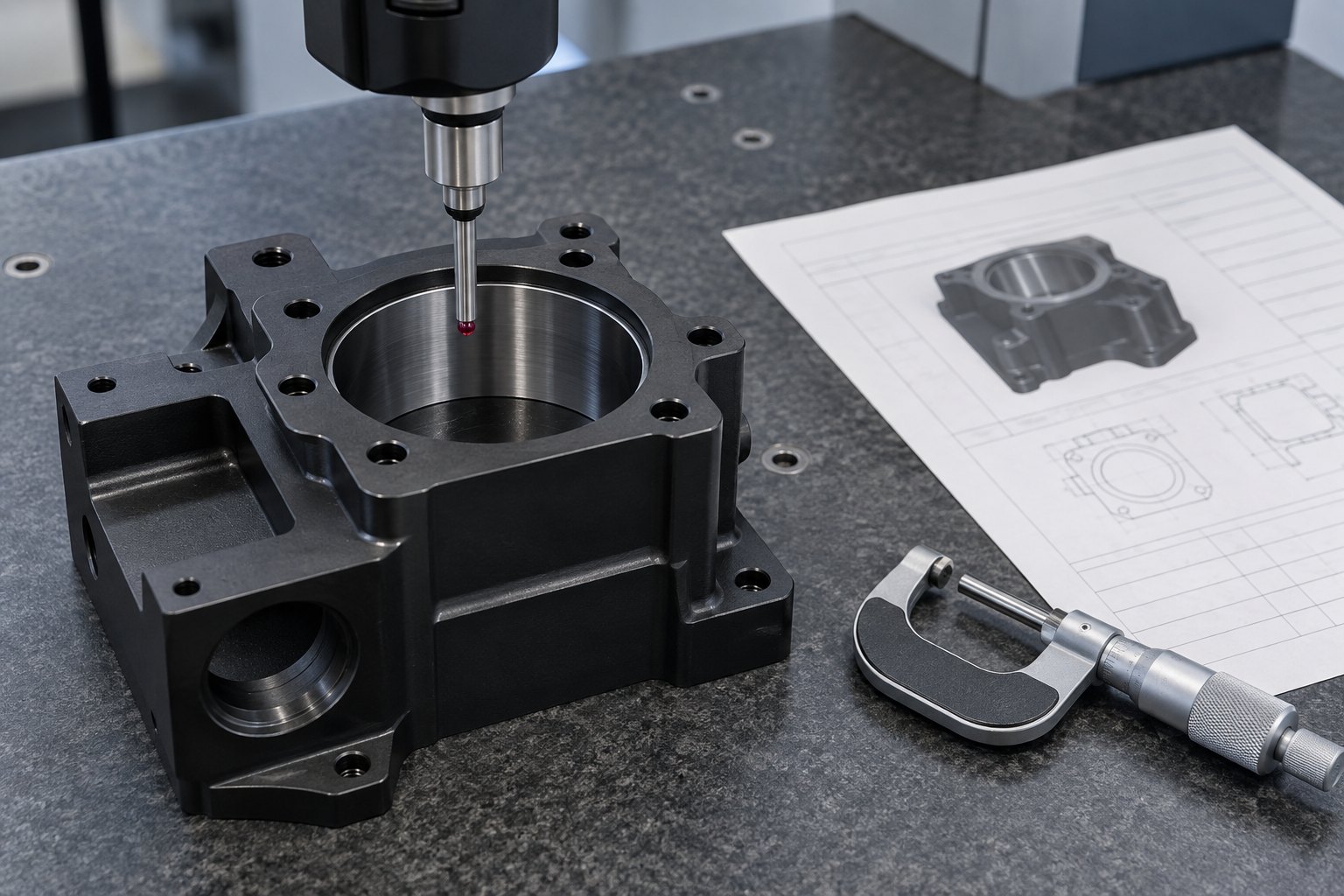
We made twelve 6061-T6 housings from a STEP file at revision C and its controlled drawing. The drawing called for a 2.5 mm minimum wall, a Ø20.00 ±0.02 mm bore, and Ra 1.6 µm on the sealing face. The material record identified heat H62-041.
The route was 3-axis milling, roughing, finish milling, deburring, and black anodizing through an outside processor. The traveler linked the toolpath revision to the lot. A CMM checked the bore and flatness. A micrometer checked the outside width. Visual inspection checked the anodized surface. The release record tied the results to lot 24-117 and a named approver.
When the finish requirement changed from clear anodize to black anodize, the part number stayed the same. The review record changed the outside-process instruction, masking note, acceptance sample, and final inspection step. That is controlled change evidence under the logic of ISO 9001:2026 Clause 6.3. A new file alone would not prove review.
For a repeat order, the trigger is clear: a different toolpath, inspection instrument, or outside process without documented review. Stop and investigate the affected lots. A stable part number does not prove a stable route.
See also: Shop Rate 6061-T6 Aerospace: What Sets the Price
What does ISO 9001:2026 change for CNC order evidence?
An ISO 9001:2026 CNC review strengthens the case for controlled QMS changes, but it does not create a universal CNC paperwork package. EPOC CRAFTER connects Clause 6.3 to changes in machining sequence, inspection equipment, software, work instructions, and external processors. Ask for the review, approval, communication, and production-record link.
EPOC CRAFTER also warns that Clause 8 controls, material certificates, FAI, PPAP, and lot traceability are not automatically required by the revision. Their need comes from the drawing, purchase order, customer program, sector or regulatory controls, or the supplier’s QMS.
- External processes: Link anodizing, heat treatment, plating, or outside testing to the affected production lot.
- Measurement: EPOC CRAFTER’s ±0.05 mm CMM threshold is its own practice, not an ISO 9001 requirement. Choose the method by feature, tolerance, and order requirement.
- Certification: Verify the edition, legal entity, site, scope, validity, and certification body. ISO says organizations certified to ISO 9001:2015 transition within the timeframe set by their certification cycle.
- CNC Instant Quote status: CNC Instant Quote is not certified to ISO 9001:2026. We are not presenting an ISO 9001:2015 certificate or a certified scope here.
FAQ: CNC services audit questions
Do you need ISO 9001:2026 certification to buy CNC parts?
No. ISO 9001 certification is optional. Verify the certificate edition, legal entity, site, scope, and validity when a supplier claims certification.
Does ISO 9001:2026 require FAI, PPAP, or a material certificate?
No. The revision does not automatically require them. The drawing, purchase order, customer program, sector rule, regulation, or supplier QMS may require them.
What is a failing signal in a repeat CNC order?
A different toolpath, measuring instrument, or outside process with no documented review is a failure trigger. Hold release and identify affected lots.
What should you do after a CNC services audit?
Treat the audit as a trace test. If you cannot move from CAD revision to material heat, route, measurement, change review, and release in one chain, you do not yet have objective evidence for that order. Review our CNC milling and turning capabilities or upload your CAD for an instant quote →
Related guides
Price your part in seconds
Upload a STEP or IGES file — real geometry, real pricing, no waiting.