Partial FAI AS9102C: Quote-Stage Guide
Published 2026-10-10 · Tolerances

SAE AS9102C, revised June 28, 2023, makes partial FAI AS9102C a quote-stage option when a documented change affects only part of an approved configuration. Clause 4.6 supports partial or re-accomplishment logic. A new part normally needs a full FAI, not a reduced submission.
The practical question is not whether a change sounds small. It is which drawing characteristics, materials, processes, inspection methods, and production conditions the change can affect. That impact analysis determines inspection scope, price, and lead time.
What are the AS9102C FAI triggers at quote stage?
The AS9102C FAI triggers are a new part, an engineering change, a process or location change, and a production lapse. QualityEngineer.ai's four-trigger table gives the useful quote-stage split: a new part normally requires a full FAI, while the other cases may support a partial first article after documented review.
| Trigger | Quote decision | Use when |
|---|---|---|
| New part number or released configuration | Full FAI | The production configuration has no approved baseline. |
| Engineering change | Partial or full | Only affected dimensions, notes, materials, or processes changed. |
| Process or location change | Partial or full | The new NC program, fixture, source, machine, or location can affect conformance. |
| Production lapse | Usually full; partial only with evidence | No conforming production occurred for two years, or less if the customer flows down a shorter period. |
The two-year lapse is the concrete AS9102C threshold described in the QualityEngineer.ai guidance. A customer requirement can shorten it. IAQG's 9102 First Article Inspection Requirement explains the standardization goal, but your customer or prime may still require a full re-accomplishment.
SCMEP Online's AS9102 First Article Inspection Guide is useful at quote time because it treats each drawing dimension, note, and callout as an accountable inspection characteristic. That prevents a partial scope from becoming a vague promise to check a few representative features.
When does partial FAI AS9102C apply to a changed part?
Partial FAI AS9102C applies when you can trace the change to a limited set of characteristics and show why the remaining baseline stays valid. The original FAI remains part of the record. The partial submission adds fresh evidence for the affected configuration.
For example, a bore changes from 0.500 ±0.005 in to 0.502 ±0.003 in. The new nominal and tighter tolerance belong in the affected characteristic review. If that bore carries a linked position callout, datum relationship, or functional fit requirement, those linked characteristics may also belong in Form 3.
A surface-finish change can expand the same scope. If the requirement changes from Ra 3.2 µm to Ra 1.6 µm, Form 3 needs a fresh result for that finish requirement. The measurement method, tool access, and finish process may also require review.
How should the partial record carry the change?
Form 1 remains complete because it identifies the part, baseline, revision, and re-accomplishment status. Form 2 carries changed material or process rows, such as a new anodize processor or heat-treat source. Form 3 records fresh results against the baseline part number and revision for every affected characteristic.
GDLS AS9102C field guidance is a useful check for the baseline and reason fields. Record the prior approved part number and revision, identify the change reason, and make the link between the new result and the original FAI unmistakable.
If the drawing revision is unclear, resolve that before pricing inspection work. CNC Machining Design Mistakes Cost You More Than You Think covers the design ambiguities that often become added programming, inspection, or rework scope.
Which change cases need documented judgment?
A change does not become an automatic partial FAI merely because it sounds administrative. Reposted code, a new fixture, an inspection-method change, an anodize processor change, and an identical worn-tool replacement each need a documented impact decision.
| Change case | Likely review | Use when |
|---|---|---|
| Reposted NC program | Partial if affected toolpaths or characteristics are identified | The postprocessor, sequencing, compensation, or cutting strategy changed. |
| New fixture | Partial if workholding can move or distort features | The fixture changes datum location, clamping force, access, or repeatability. |
| Changed inspection method | Partial if measurement results or uncertainty can change | A CMM, bore gauge, optical system, or manual method replaces the baseline method. |
| Changed anodize processor | Form 2 and linked Form 3 review | The special-process source, specification, thickness, color, or masking can change. |
| Identical worn-tool replacement | Documented judgment; not automatically partial | The replacement preserves the approved process and produces no affected change. |
QualityEngineer.ai's partial FAI guidance emphasizes impact analysis rather than a checklist-only decision. The failure mode is under-scoping: a supplier lists the obvious diameter but misses the position callout, finish, datum relationship, or process row touched by the change.
What are the FAI quote requirements for CNC Instant Quote?
For a useful FAI quote, send the baseline and changed configuration together. We quote CNC milling and turning in aluminum, copper, brass, steel, and plastics from CAD geometry, but inspection scope still depends on the drawing and your change history.
- Part number and current revision, plus the prior approved revision.
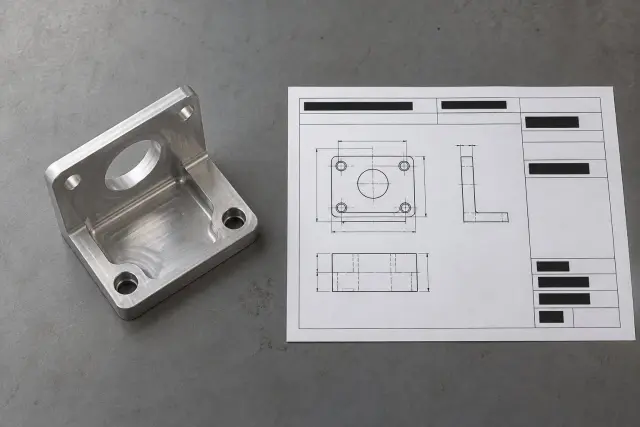
- Released drawing with GD&T, material, finish, special-process notes, and surface-finish requirements.
- CAD model that matches the drawing revision, such as a STEP file for the changed configuration.
- Inspection request identifying full FAI, partial FAI, customer form requirements, and any required measurement method.
- Production quantity, sample quantity, material grade such as 6061-T6 or 7075-T6, and required delivery date.
- Change history showing the engineering, process, location, inspection, or production-lapse reason.
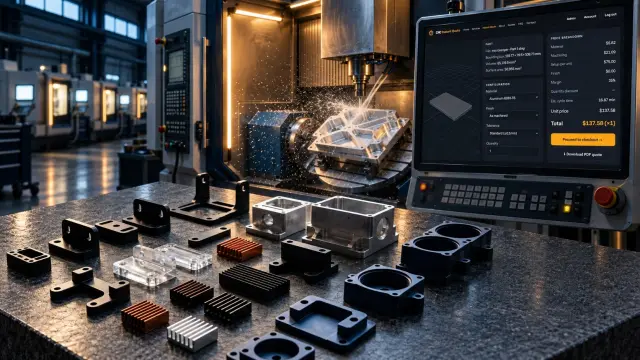
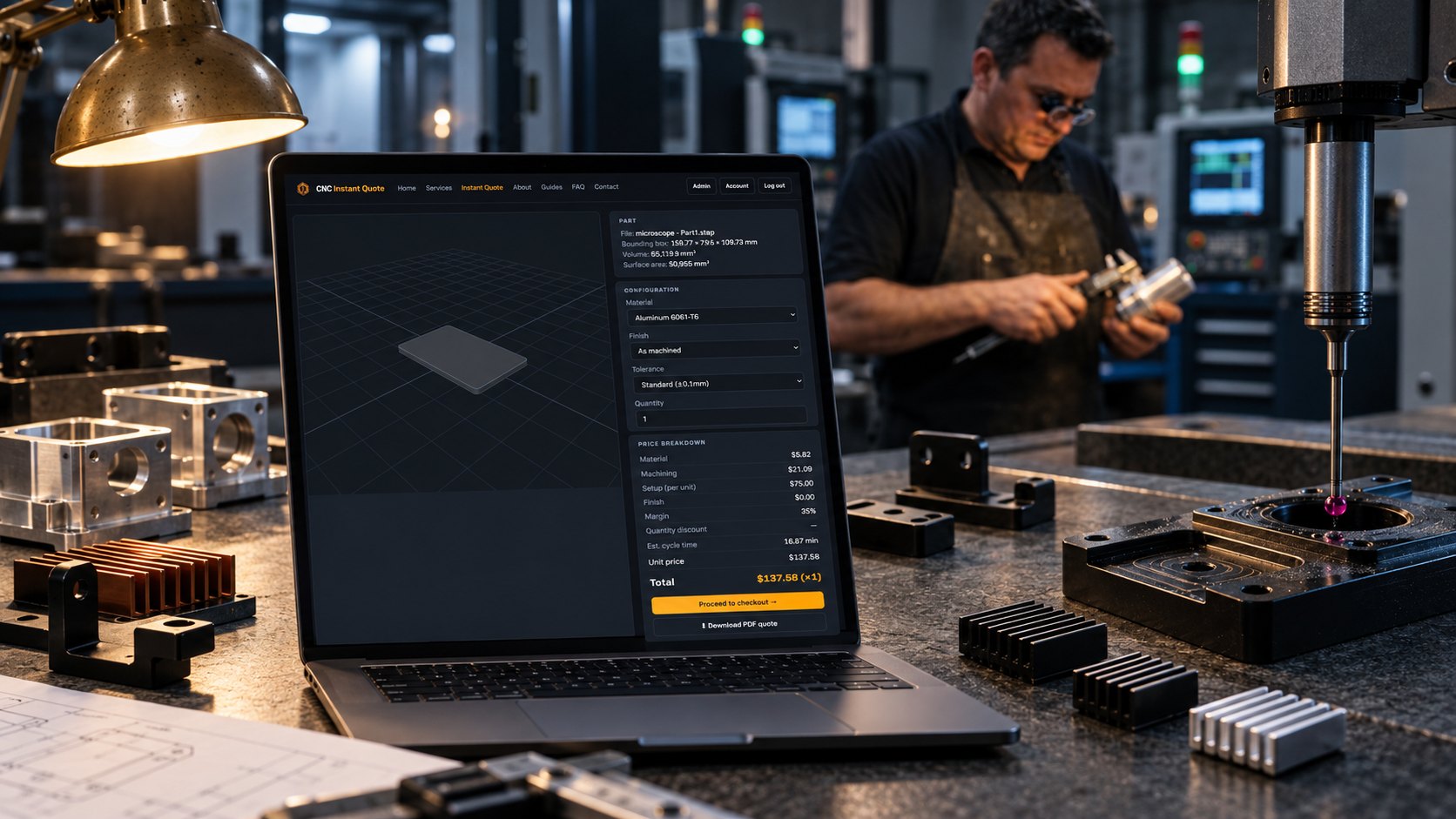
Our quote interface shows the STEP filename, bounding box, volume, surface area, material, finish, tolerance, quantity, price breakdown, and a downloadable PDF quote. That is the documentation we can verify from the quoting flow. Do not describe the PDF quote as a completed AS9102C FAIR.
- Identify the baseline revision first. Failure mode: quoting Rev C while the uploaded CAD still represents Rev B.
- Mark the changed characteristics and linked callouts. Failure mode: pricing only the changed diameter while missing its position or datum controls.
- State the inspection request and measurement method. Failure mode: adding CMM work after the machining quote has already been approved.
- Provide quantity and delivery requirements. Failure mode: assuming one inspection sample and twelve production parts have the same setup cost.
- Attach the change history and customer instructions. Failure mode: treating a prime-specific one-year lapse rule as the AS9102C two-year default.
If your procurement team is comparing supplier controls, ISO 9001:2026 Supplier Questions for Machined Parts is the next useful checklist. If the geometry may be routed rather than milled, compare the process implications in CNC Router vs Mill: Choose from Your CAD before locking the quote.
How does a partial FAI change price and lead time?
A partial FAI can reduce inspection setup and measurement time, but only when the change scope is clear. A full FAI may require a complete characteristic review, while a narrow change may add only targeted CMM, finish, material, or process verification.

Illustrative redacted request: [REDACTED BRACKET], Rev C, 6061-T6, quantity 12. The change moves one bore from 0.500 ±0.005 in to 0.502 ±0.003 in, changes a linked position callout to 0.010 in, and changes finish from Ra 3.2 µm to Ra 1.6 µm. The quote scope adds three Form 3 characteristics, a finish verification, and one inspection setup day.
| Affected scope | Quote effect | Typical planning effect |
|---|---|---|
| One dimensional tolerance only | Add targeted measurement and review | Often hours, depending on access and method. |
| Dimension plus linked position and datum callouts | Add coordinated CMM programming and results | Often one additional inspection day. |
| New material or special-process source | Add Form 2 certification review and affected characteristics | Lead time follows the processor or laboratory. |
| Two-year production lapse | Plan for full FAI unless customer-approved evidence supports partial scope | May add several inspection days and scheduling risk. |
The price also reflects setup, quantity, material, finish, and delivery. CNC Machining Tariffs 2026: Why Your Quote Costs More explains why material and supply-chain changes can move the machining quote even when the geometry stays fixed.
FAQ: partial FAI AS9102C quoting
Does a new drawing revision always require a full FAI?
No. An engineering change may support a partial first article when the affected characteristics and unaffected baseline are documented. Your customer may still require a full FAI.
Is a new fixture automatically an AS9102C partial FAI trigger?
Not automatically. Review whether clamping, datum transfer, access, or repeatability can affect conformance. Record the judgment and inspect every affected characteristic.
What should Form 3 show for a changed bore?
Form 3 should show the fresh result for the new bore requirement and any linked position, datum, fit, or finish characteristic affected by the change.
Does CNC Instant Quote provide an AS9102C FAIR?
The verified quoting flow provides CAD-based pricing details and a PDF quote. Request and price any required AS9102C inspection package as a separate documented scope.
What should you do before requesting a partial FAI?
Send the current drawing, matching CAD model, baseline revision, change history, inspection request, quantity, and customer-specific lapse rules. Clear scope lets us price machining and inspection against the characteristics that actually changed. Start with our CNC machining milling services and include the FAI request with your quote package →
Related guides
Price your part in seconds
Upload a STEP or IGES file — real geometry, real pricing, no waiting.