
CNC Quote ISO 2768: Legacy Drawing Rules
Published 2026-09-20 · Tolerances
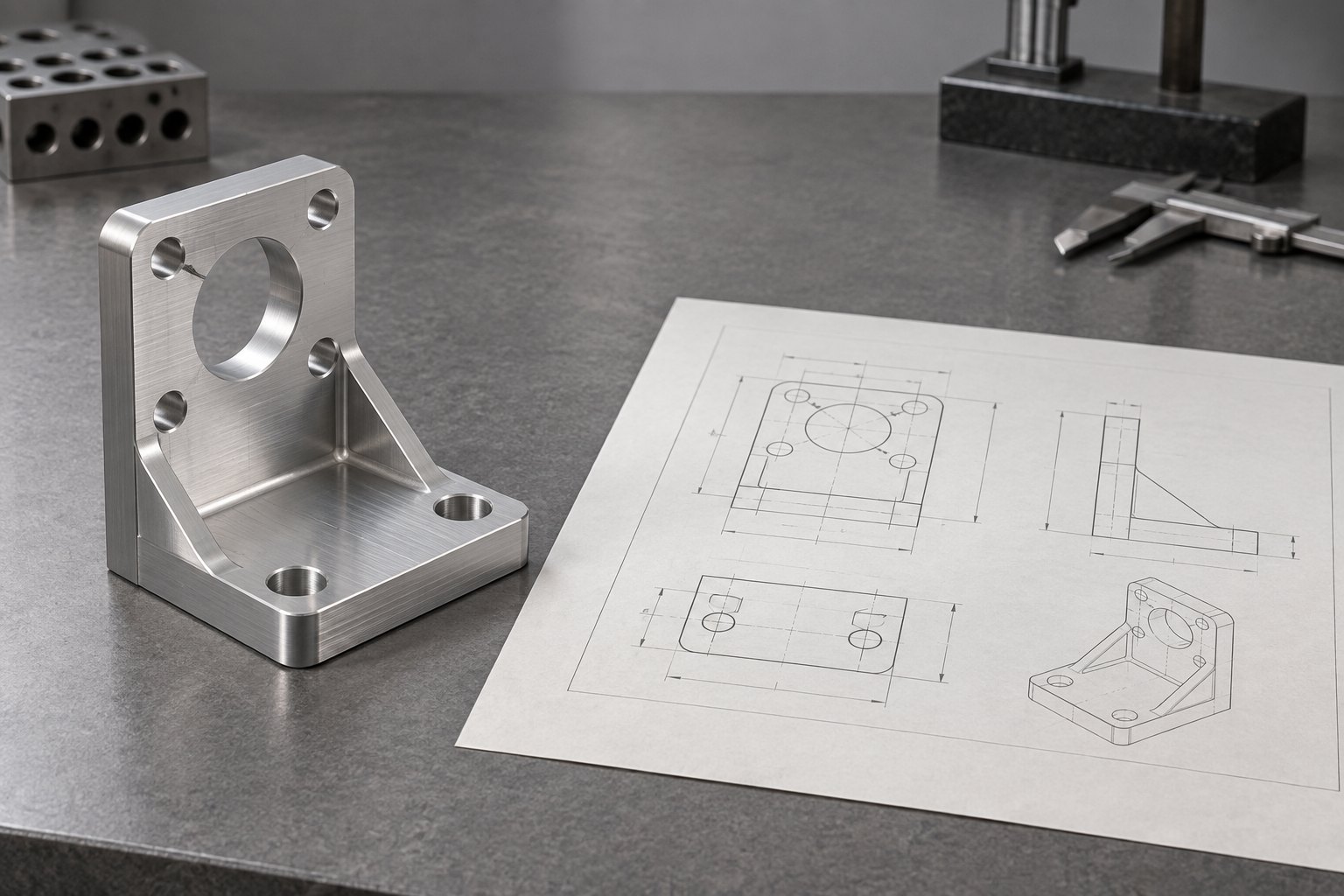
For a CNC quote ISO 2768 note dated ISO 2768-1:1989, treat the note as a legacy drawing requirement and confirm the actual default tolerances before pricing. ISO 2768 edition 2 is at stage 60.00 under publication, but it does not automatically replace every released drawing. Quote from the geometry and escalate ambiguous requirements.
The practical issue is the transition. Your drawing may still rely on old rules for edges, rejection, and untoleranced features. This guide shows what changed, what a buyer should preserve, and how two anonymized CNC Instant Quote reviews handled the difference. — Ashkan, CNC engineer.
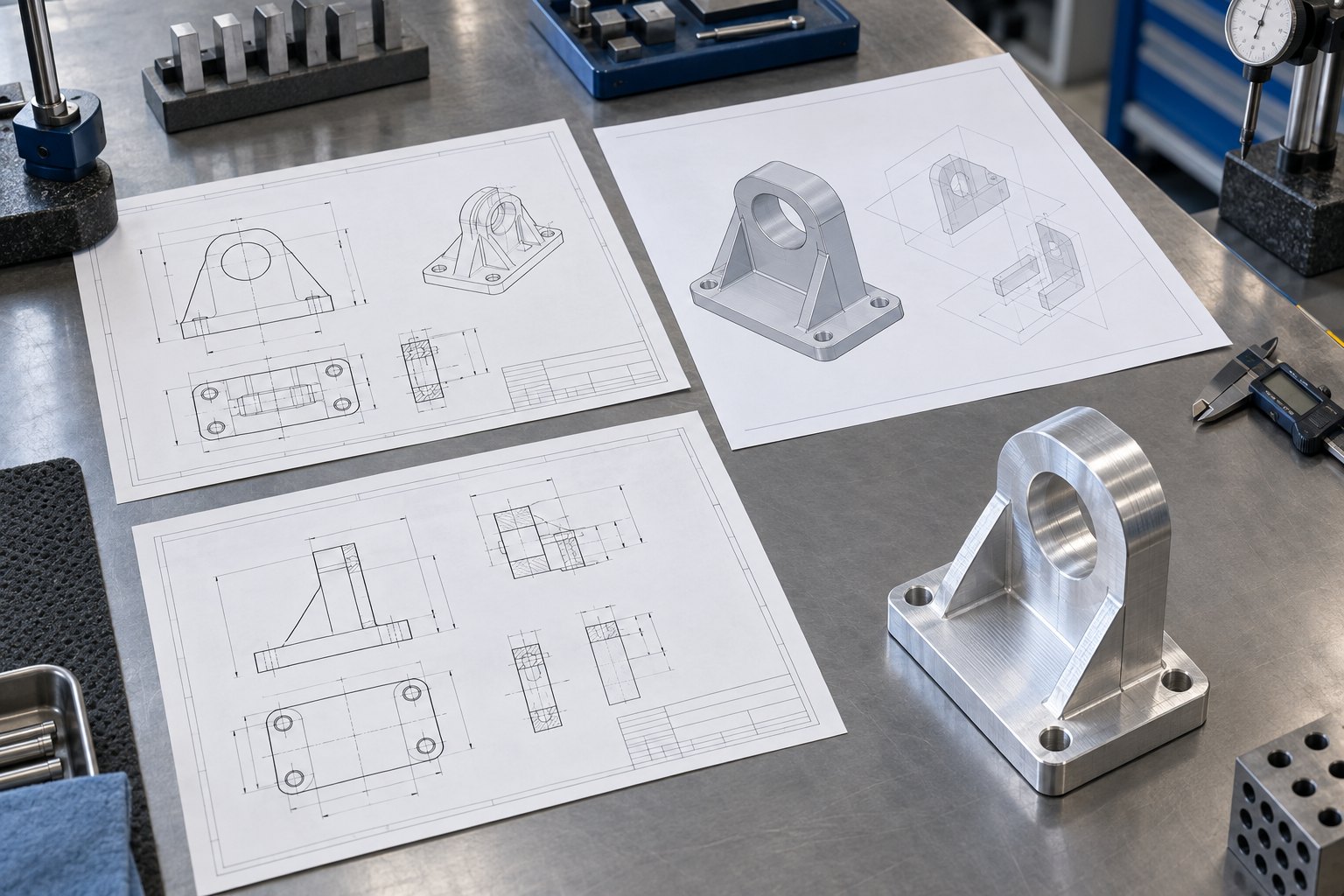
What does ISO 2768 edition 2 change?
ISO 2768 edition 2 is listed at stage 60.00, International Standard under publication, and identifies ISO 2768-1:1989 as the previous edition. That publication status signals a controlled transition. It does not tell you to rewrite every released drawing today.
The ISO/DIS 2768 preview states that the revision removes Clause 6, the rejection rule. It restricts the document to linear and angular sizes. It also removes tolerance limits for broken edges, radii, and chamfers, and extends application independently of material and manufacturing method.
The same preview points to ISO 22081 for general specification issues and ISO 14253-1 for decision rules when verifying conformity. That separation matters in a quote. A general size tolerance is not a complete acceptance plan for every edge, radius, surface, or inspection decision.
| Change | What the preview says | Quote decision | Use when |
|---|---|---|---|
| Clause 6 | The rejection rule is removed. | Do not import the legacy rejection rule by assumption. | Reviewing acceptance language on an old drawing. |
| Scope | The document covers linear and angular sizes. | Do not use it alone to define broken edges, radii, or chamfers. | Separating size requirements from edge treatment. |
| Application | Application is independent of material and manufacturing method. | Still verify process capability and functional need. | Quoting aluminum, copper, brass, steel, or plastics. |
| Related standards | ISO 22081 and ISO 14253-1 are referenced for related issues. | Use the correct standard for general specifications and decision rules. | Writing a new drawing or resolving a supplier question. |
How should you handle a CNC quote ISO 2768 note from 1989?
A CNC quote ISO 2768 review should preserve the drawing's released intent, identify what the legacy note actually controls, and expose anything that needs buyer approval. Do not silently reinterpret ISO 2768-1:1989 as the new edition.
- Copy the exact title-block note into the quote review. Failure mode — ISO 2768-m, ISO 2768-mK, and an undated internal note can be treated as the same requirement when they are not.
- Mark function-critical dimensions separately. Failure mode — a bearing seat, sealing face, or hole pattern inherits a broad default because the drawing never identifies its purpose.
- Define broken edges, radii, and chamfers explicitly. Failure mode — the buyer expects a controlled edge while the legacy general note is interpreted differently by the shop.
- Agree on the inspection decision rule. Failure mode — a measured value near a limit becomes a rejection dispute because the drawing gives no current acceptance method.
- Upload the STEP file with the drawing and revision. Failure mode — the quote prices CAD geometry while a title-block requirement remains invisible to the manufacturing review.
For a general tolerance CNC quote, state whether the note is being used for legacy interpretation or for a new design. If the part is a 6061-T6 bracket with a 4 mm wall and a 12 mm pocket, those dimensions may price normally while an unspecified edge requirement still needs clarification.
Why do ranking pages still show ISO 2768-m bands?
Ranking pages usually summarize the legacy table because shops still receive drawings that use it. That explains the fixed default numbers. It does not explain the 2026 transition or prove that every old edge and rejection rule carries forward.
Machining Supplier's CNC Tolerance Guide — ISO 2768, Achievable Limits & Cost Trade-offs lists medium values of ±0.1 mm for nominal sizes from 0.5 to 6 mm, ±0.2 mm from 6 to 30 mm, and ±0.3 mm from 30 to 120 mm. CNC Fabworks' CNC Tolerance Guide: ISO 2768-m/f/c with Real Examples presents the same medium bands in its m/f/c table.
Those values remain useful when you must interpret a released ISO 2768-1:1989 drawing. Treat them as the drawing's legacy basis only after checking the note, revision, and contract. For new ISO 2768 2026 machining work, define critical dimensions and edge conditions instead of copying a title-block default without review.
What does a CNC Instant Quote review flag or price?
In two anonymized CNC Instant Quote drawing reviews, the legacy title-block note was escalated while explicit critical dimensions were priced with clear cost drivers. The quote engine can price the STEP geometry, but an ambiguous drawing requirement can keep the quote provisional.
| Drawing | Concrete evidence | Engine result | Buyer action |
|---|---|---|---|
| Legacy title block | 6061-T6 bracket, 120 mm overall length, 4 mm wall, 12 mm pocket, ISO 2768-m note. | Geometry received a provisional base price. The legacy note was flagged and escalated because edge and rejection intent were unclear. | Confirm whether the released 1989 interpretation remains contractual. |
| Explicit critical dimensions | 7075-T6 plate, Ø10 mm bore at ±0.02 mm, 25 mm hole pitch at ±0.03 mm, Ra 1.6 µm on the mating face. | The STEP geometry was priced. The bore, hole pattern, and finish were carried as visible process and inspection drivers without a standards escalation. | Keep the general note for noncritical features and retain explicit callouts for function. |
This is the useful distinction for buyers. A legacy note can affect quote confidence even when the model is simple. An explicit bore, pitch, or surface requirement gives the machining and inspection plan something concrete to price. We see the same pattern across CNC milling and turning in aluminum, copper, brass, steel, and plastics.

Should you update every released drawing for ISO 2768 2026 machining?
No. A new edition moving through publication does not automatically rewrite an approved drawing, supplier agreement, or inspection plan. Keep the released requirement under document control, then revise it when your engineering and quality process approves the change.
| Drawing state | Recommended handling | Use when |
|---|---|---|
| Released production drawing | Retain the legacy note, record its interpretation, and do not silently apply edition 2. | The part is already approved and the supplier process is validated. |
| New drawing | Use the current approved standard after publication and define critical sizes, edges, and inspection rules separately. | You are releasing a new design or major revision. |
| Mixed or retrofit program | Keep the old note for unchanged features and add explicit callouts for function-critical dimensions. | New parts must fit an existing assembly or supplier process. |
If your organization is migrating drawings, start with parts that create recurring quote questions. A 10 mm bore, 0.02 mm fit requirement, or Ra 1.6 µm sealing face deserves an explicit callout. A nonfunctional 120 mm outside length may not need a tighter requirement than the general class.
ISO 2768 CNC quote questions
Is ISO 2768-1:1989 automatically invalid?
No. ISO 2768-1:1989 is identified as the previous edition, but your released drawing still needs controlled revision. Keep the existing interpretation until your engineering, quality, and purchasing process approves a change.
Does edition 2 still define radii and chamfers?
The ISO/DIS 2768 preview says the revision removes tolerance limits for broken edges, radii, and chamfers. Define those features separately when their size or function matters.
Will a quote engine price a legacy ISO 2768 note?
The STEP geometry can receive a base price, but an ambiguous legacy note may be flagged or escalated. Explicit critical dimensions let the quote carry measurable process and inspection requirements.
Conclusion: price the drawing you intend to buy
Use the legacy ISO 2768-1:1989 note as a controlled drawing requirement, not as an automatic shortcut to the new edition. Separate general size tolerances from edges, critical fits, surface finish, and inspection decisions. Then upload your STEP file and drawing to request a CNC quote with the tolerance requirements you intend to buy →.
Related guides
Price your part in seconds
Upload a STEP or IGES file — real geometry, real pricing, no waiting.