
CNC Quote Tight Tolerance Cost, Explained by Band
Published 2026-09-18 · Tolerances
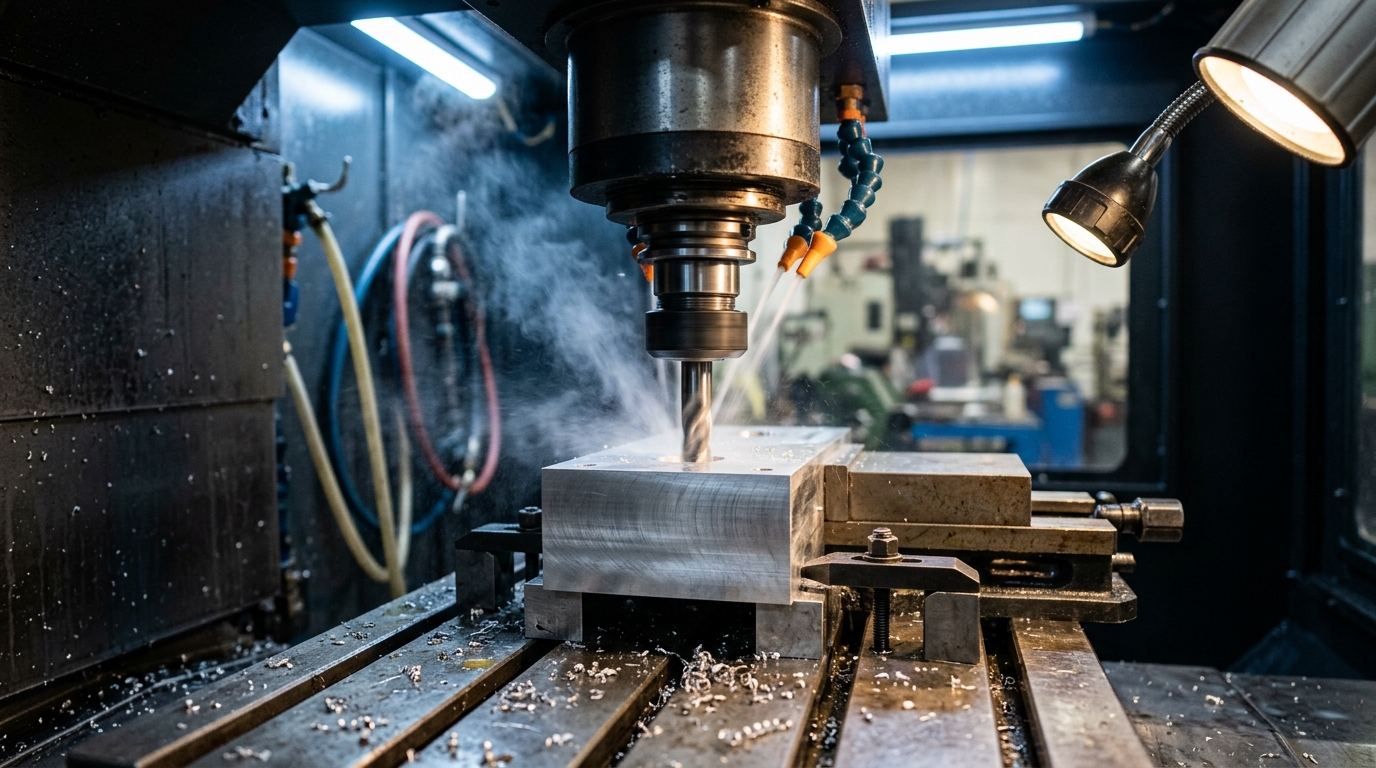
Upload a STEP file and our engine reads every note on your drawing — including the tolerance callouts you may not have meant to tighten. A cnc quote tight tolerance cost jump almost always traces back to one or two dimensions, not the whole part. Change a single bore from ±0.005" to ±0.001" and you can double the price of that feature alone, even while every other dimension on the part stays at standard.
This guide breaks down what each tolerance band actually costs, why the cost climbs the way it does, and how to spend your tolerance budget on the features that need it — bearing bores, seal grooves, press fits — instead of paying precision prices on a mounting hole. We cover STEP file prep and stock sizing in our other Machining Guides; this one stays focused on the price-per-tolerance-band relationship, and on how our own quoting engine prices each callout.
Tolerance Bands and the CNC Quote Tight Tolerance Cost Table
RivCut's CNC tolerance guide lays out four working tolerance bands, and the cost multiplier attached to each one matches what we see on our own quotes. Here's how tolerance affects CNC quote pricing, band by band:
- Standard — ±0.005" (±0.13 mm): baseline cost, 1×. Default on clearance holes, mounting faces, and most outer profiles.
- Tight — ±0.002" (±0.05 mm): 1.5–2× baseline. Used on sliding fits, dowel pin holes, and locating features.
- Precision — ±0.001" (±0.025 mm): 2–3× baseline. Reserved for press-fit bores, seal grooves, and aerospace mating surfaces.
- Ultra-precision — ±0.0005" (±0.013 mm): 3–5× baseline. Needed for interference fits and features that must repeatably interchange in an assembly.
These multipliers apply per feature, not per part. A bracket with one ±0.001" bore and eleven ±0.005" holes prices close to standard, not close to precision. That's the part of a tight tolerance CNC price buyers usually miss: the multiplier follows the callout, not the drawing's title block.
Why Tighter Bands Cost More: Four Reasons on the Shop Floor
Uptive's breakdown of precision versus cost lines up with what happens on our machines. Four mechanical realities push the price up as the band tightens:
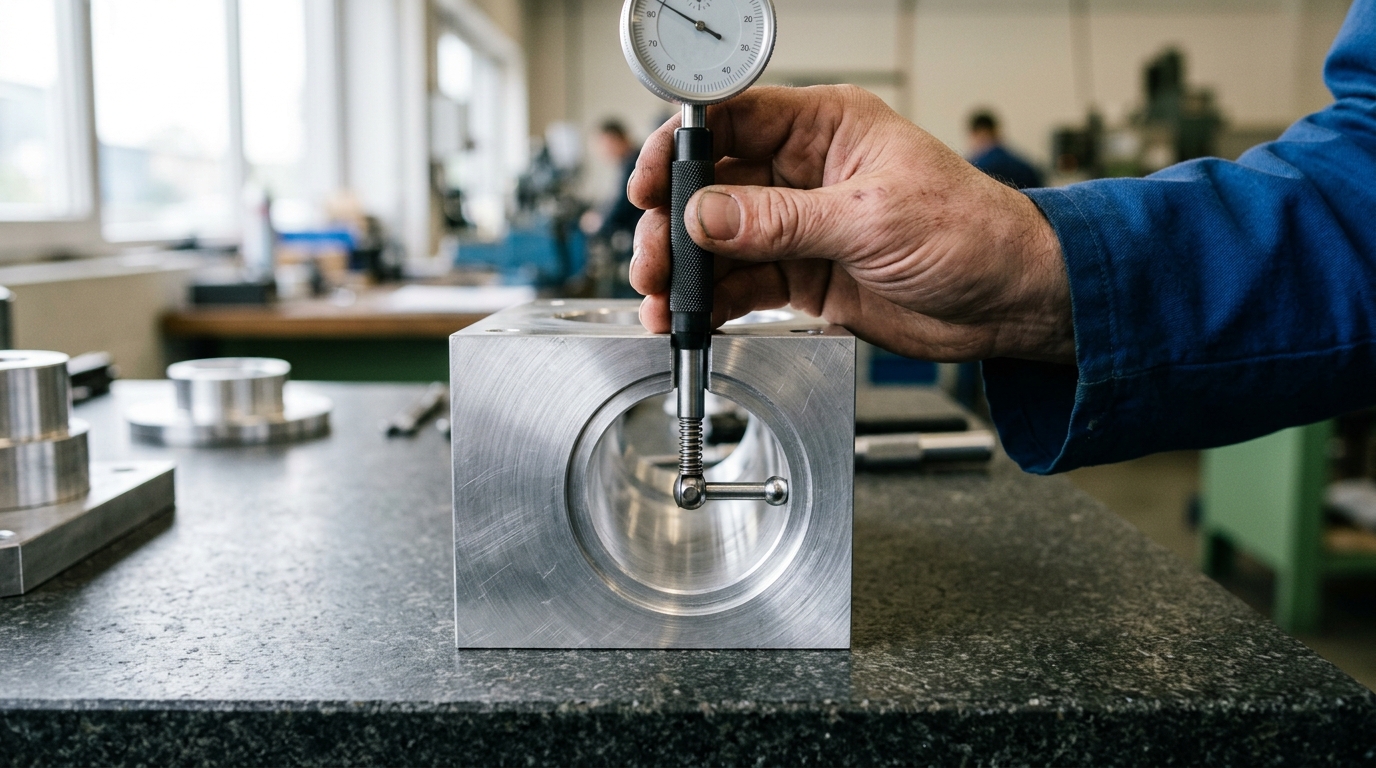
- Slower cuts. Tighter tolerance means lighter finishing passes and lower feed rates, so the same feature takes longer to machine.
- More passes. A ±0.005" hole can finish in one pass. A ±0.001" bore often needs a rough, a semi-finish, and a finish pass.
- Sharper, costlier tooling. Holding ±0.0005" needs fresh, high-precision cutters — a worn edge drifts out of tolerance fast, so tools get swapped more often.
- More inspection. Every tight feature gets measured and logged, sometimes on a CMM instead of a caliper, and that time gets built into the quote.
The ±0.005" to ±0.0005" Jump
Uptive uses this example, and it's the clearest way to see the multiplier: going from ±0.005" to ±0.0005" makes the allowed variation ten times smaller. That's not just a slower mill pass — it's often a different process. We've seen it require grinding or reaming after milling, plus in-process measurement between cuts to catch drift before it turns into scrap. That's why ultra-precision lands at 3–5× baseline instead of a flat step up from precision.
Spend Your Tolerance Budget Where It Matters
On most parts we quote, only about a fifth of the features actually need tight tolerance. The rest work fine at standard ±0.005", and adding GD&T or a tighter callout to them doesn't improve the part — it just adds a precision machining cost multiplier to dimensions nobody is checking. Leaving the noncritical 80% at standard capability, and reserving tight tolerance for the fifth that controls fit or function, can cut total part cost by 30–50%.
That's the core of managing cnc quote tight tolerance cost before you submit a drawing: tighten only what fit or function requires. Ask what fails if a feature runs at ±0.005" instead of ±0.001". If nothing fails, leave it standard. If a bearing won't seat or a shaft won't turn, tighten it and expect to pay the multiplier.
- Bearing bores and shaft seats
- Press-fit and slip-fit interfaces
- Seal grooves and O-ring glands
- Locating pins and dowel holes that set assembly alignment
Everything else — cosmetic edges, clearance holes, mounting faces — belongs at standard unless a drawing note says otherwise.
How CNC Instant Quote Prices Each Tolerance Callout
When you upload a STEP file or drawing, our engine reads the per-feature tolerance notes directly off the geometry and annotations. It doesn't apply one blanket rate to the whole part. If eleven features sit at standard and one bore is called out at ±0.001", only that bore gets repriced at the precision multiplier — the rest of the part keeps its standard rate.
That's a GD&T instant quote cost breakdown you can actually read: a line item tied to the flagged dimension, not a lump sum. If your number looks high, that's usually where to look first — the one callout carrying the rest of the part on its back. Loosen it to standard where function allows, and the price drops for that feature alone, not because we discounted the whole part.
Our range covers milling and turning in aluminum, copper, brass, steel, and plastics, quoted straight from your CAD geometry. Achievable bands vary by alloy — 6061-T6 holds a tight tolerance more easily than C110 copper or stainless — see Services & Capabilities for what each material holds at each band.
FAQ
Does every dimension on my drawing need a tolerance?
No. Anything without a callout defaults to our standard ±0.005" (±0.13 mm) capability. Add a tighter note only where the feature controls fit, sealing, or alignment.
Why did one bore double my quote?
Check the callout on that feature first. A jump from ±0.005" to ±0.001" alone can put a 2–3× multiplier on that dimension, even if the rest of the part is standard.
Can I mix tolerance bands on one part?
Yes, and you should. Most parts we quote mix standard, tight, and precision bands across different features. That mix is what keeps the price down.
Does material change the achievable tolerance?
Yes. Alloys like 6061-T6 aluminum hold tight tolerance more easily than stainless steel or titanium, which generate more heat and tool wear at the same band.
Get Your Number
The fastest way to see where your tolerance callouts land is to run the part through the engine yourself. Upload your STEP file and drawing on the Instant Quote page and you'll see the price broken down feature by feature, not just part by part. →
Price your part in seconds
Upload a STEP or IGES file — real geometry, real pricing, no waiting.